Sample templates define which fields, parameters and pre-selections are available when creating a new sample. The following guide describes how to create, edit and manage sample templates.
Create Sample template
Navigation
To create a sample template, follow this path:
Navigation bar → Settings → Templates → Samples tab → + Create Template
Overview
A sample template enables:
- standardising recurring entries when creating new samples
- pre-selecting parameters and master data fields
- restricting visibility to specific users or groups
Create Sample template
The following describes the fields for creating and editing sample templates. Which fields are displayed depends partly on the configuration.
Enter basic data
- Template name: Enter a unique name for the sample template. The name appears in the template management and in the navigation menu when creating new samples.
- Template status: Defines whether the sample template is active and released for use. Only released templates are available when creating new samples.
- Parent template: Assign the sample template to a parent template to build a hierarchical tree structure. If no parent template is selected, the template appears as a standalone entry at the top level.
- Order of the Sample: An order selected here will be automatically pre-selected when creating a new sample.
- Add multiple Samples: Enable this option if this template should be used to create multiple samples at once.
- Number of Samples: Define how many samples are created by default when using this template. The number can be adjusted when creating samples.
- Sample - Description: Store a pre-selection for the sample description.
- Label: Assign the sample template to a label (e.g. LM).
- Sample - Responsible: Select a user as the default responsible person for newly created samples.
- Specification: Assign a specification (limit value table) to the sample template, which is automatically applied when creating a new sample.
- Customer zone: Enable the option Use this template for Online orders to make the sample template available in the customer zone. Optionally, the template can be restricted to specific customers.
- Status for the data type: Defines the initial status assigned to a newly created sample (e.g. in progress).
- Keywords for the data type: Assign keywords to categorise the sample and simplify searching.
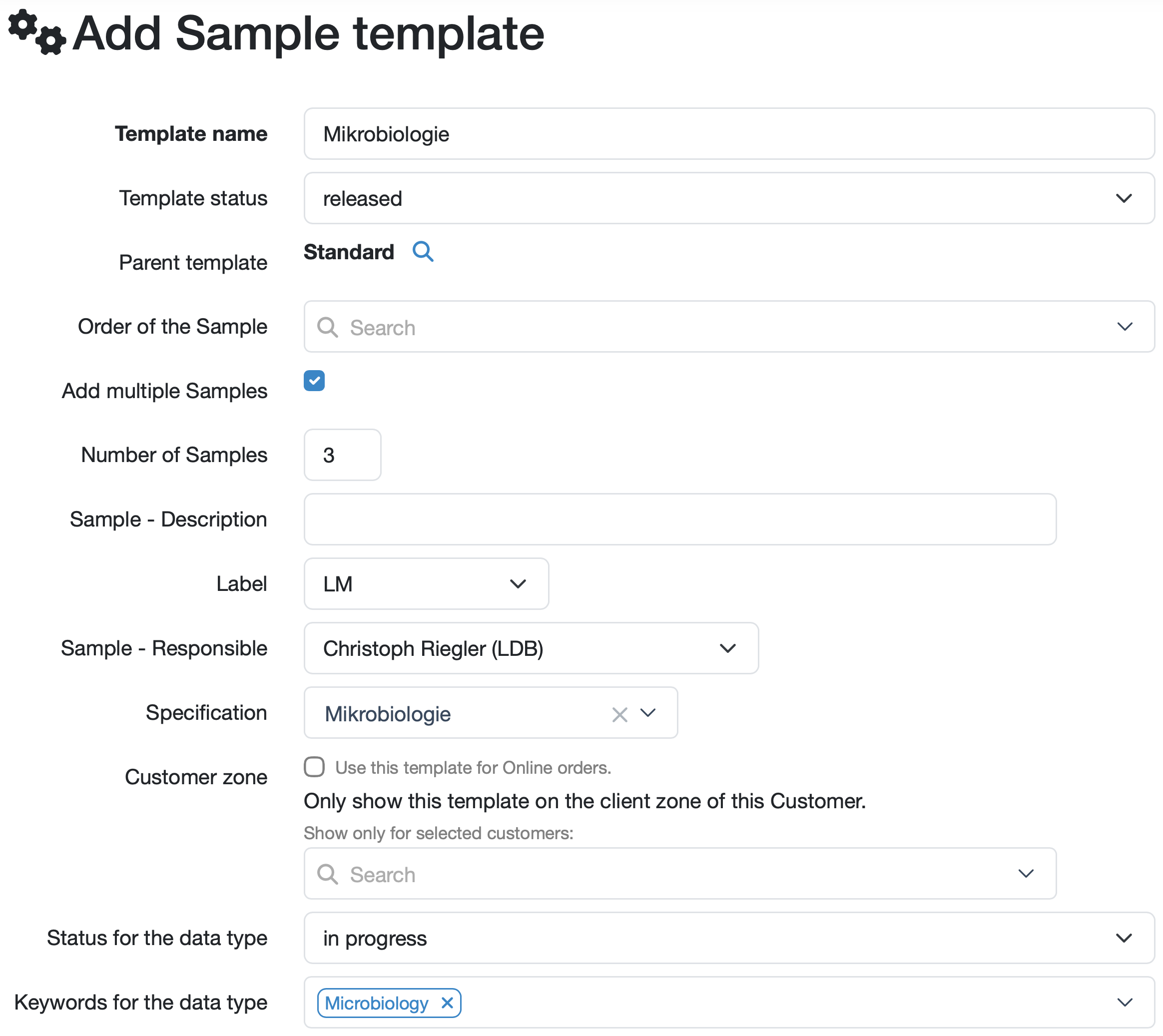
Figure: Enter basic data
Set visibility
Use the Who can see this template? section to define which users can see the sample template when creating new samples:
- Everyone: The template is visible to all users.
- Only me: The template is only visible to the user who created it.
- Employee groups: The template is only visible to selected employee groups.
- Employees: The template is only visible to selected employees.
Note: Restricted visibility is indicated by a lock symbol in the template management.
Select attributes
Your individually configured attributes are set up by your customer support team.
In the lower section of the form you can add these configured attributes to the sample template:
- Select the desired fields using the Add attribute dropdown.
- In the Default Values column, you can store a default value that is automatically suggested when creating a new sample and can be overwritten if needed.
- Enable the checkbox to the right of an attribute if that field should be filled individually per sample when creating multiple samples.
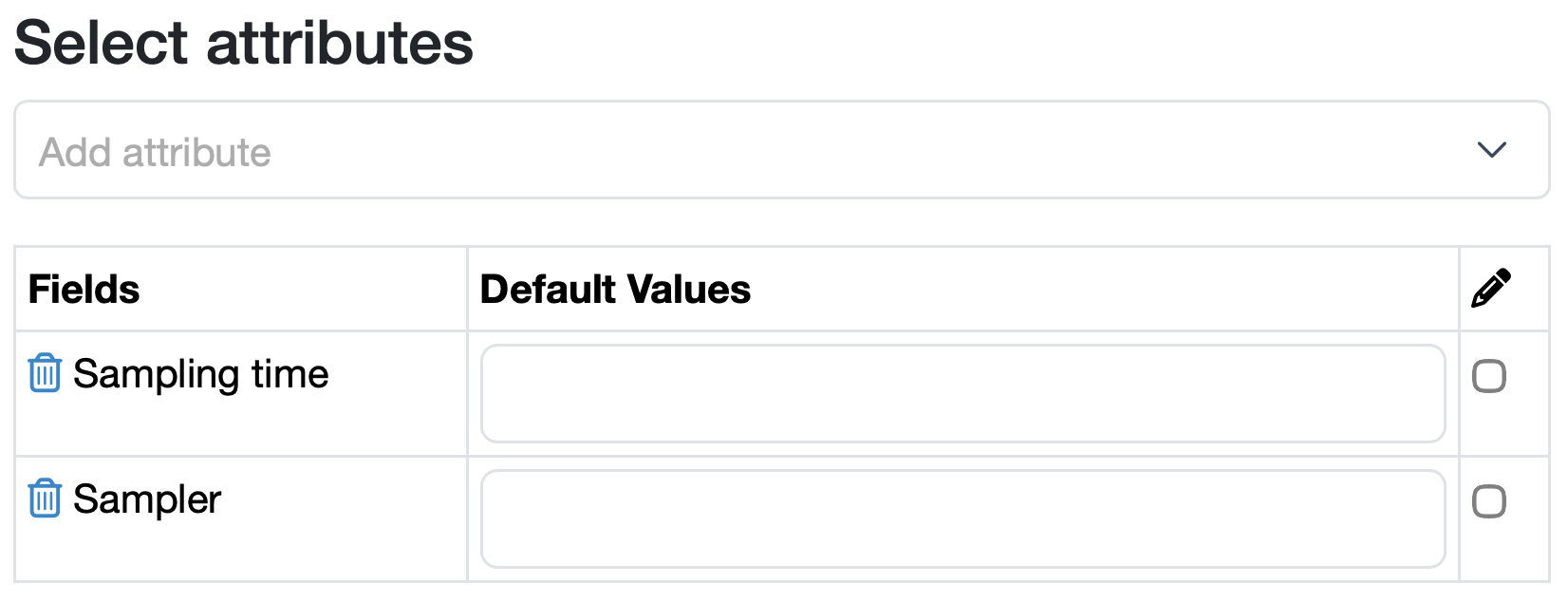
Figure: Select attributes
Preselect parameters
In the lower right section of the form you can preselect parameters that are automatically activated when creating a new sample:
- Enable the desired parameters using the corresponding checkboxes.
- Within a parameter group, individual parameters can be selected or deselected. Use the All checkbox to select or deselect all parameters within a group at once.
- Use the red minus symbol to remove parameters from the selection — these parameters will then not be available for samples of this template.
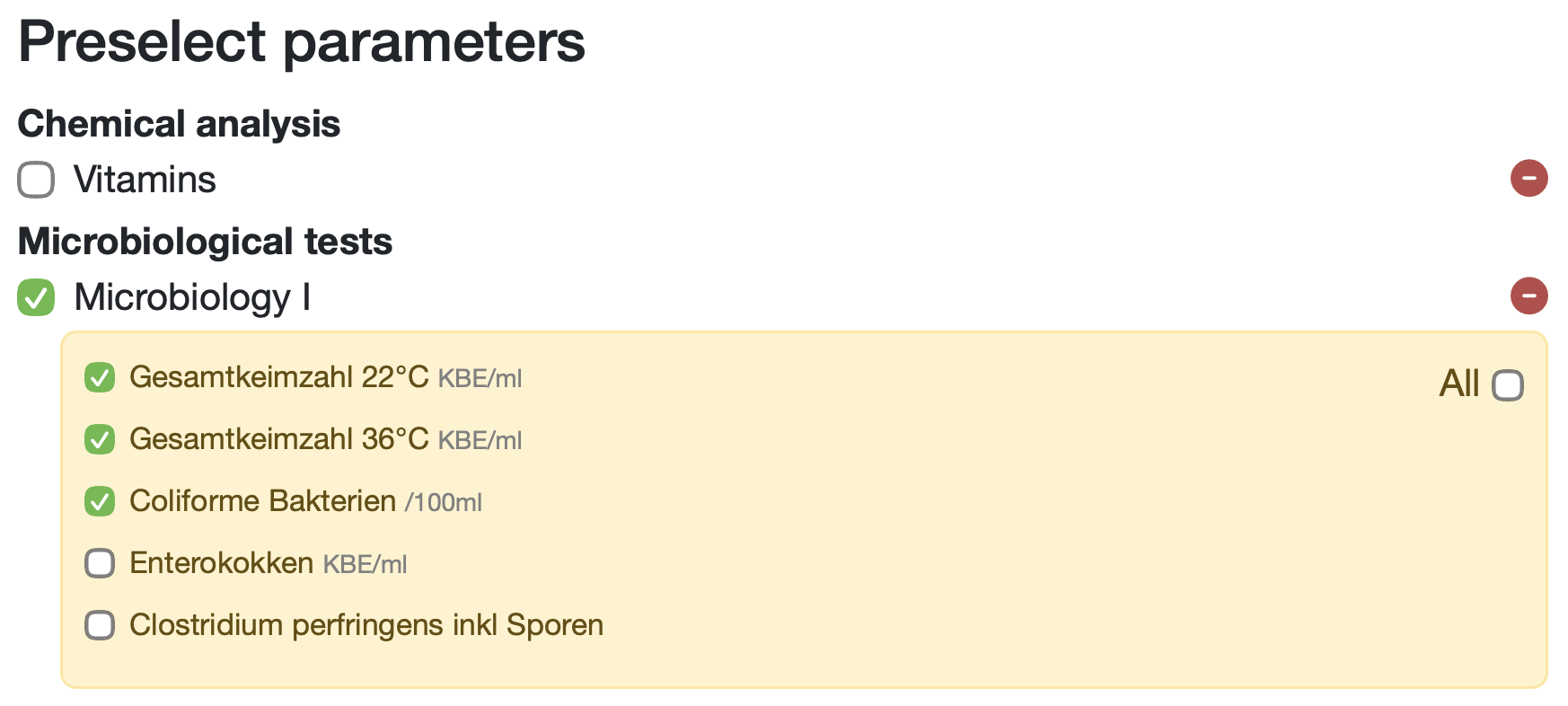
Figure: Preselect parameters
Note: Pre-fill as many fields as useful. The more completely a sample template is configured, the faster and more accurately new samples can be created. Keep in mind, however, that a large number of templates increases the maintenance effort when settings or processes change.
Edit Sample template
- Open the template management under: Navigation bar → Settings → Templates
- Click the pencil icon next to the relevant template. Use the search function if needed to find the sample template more quickly.
Copy Sample template
- Open the editing view of the desired sample template.
- Click copy at the bottom of the form to create an identical copy of the sample template.
- The copy is saved automatically and can then be adjusted.
Note: Use the copy function to efficiently create similar sample templates instead of creating each template from scratch.
Archive Sample template
Sample templates that are no longer actively used can be archived. Archived templates are hidden in the management view but remain in the system.
- Set the Template status in the editing view to a status with the property hide to archive the sample template.
Create Sample template for multiple samples
- Enable the Add multiple Samples option in the editing view.
- Under Number of Samples, define how many samples are to be created by default. Additional samples can be added or removed when creating samples.
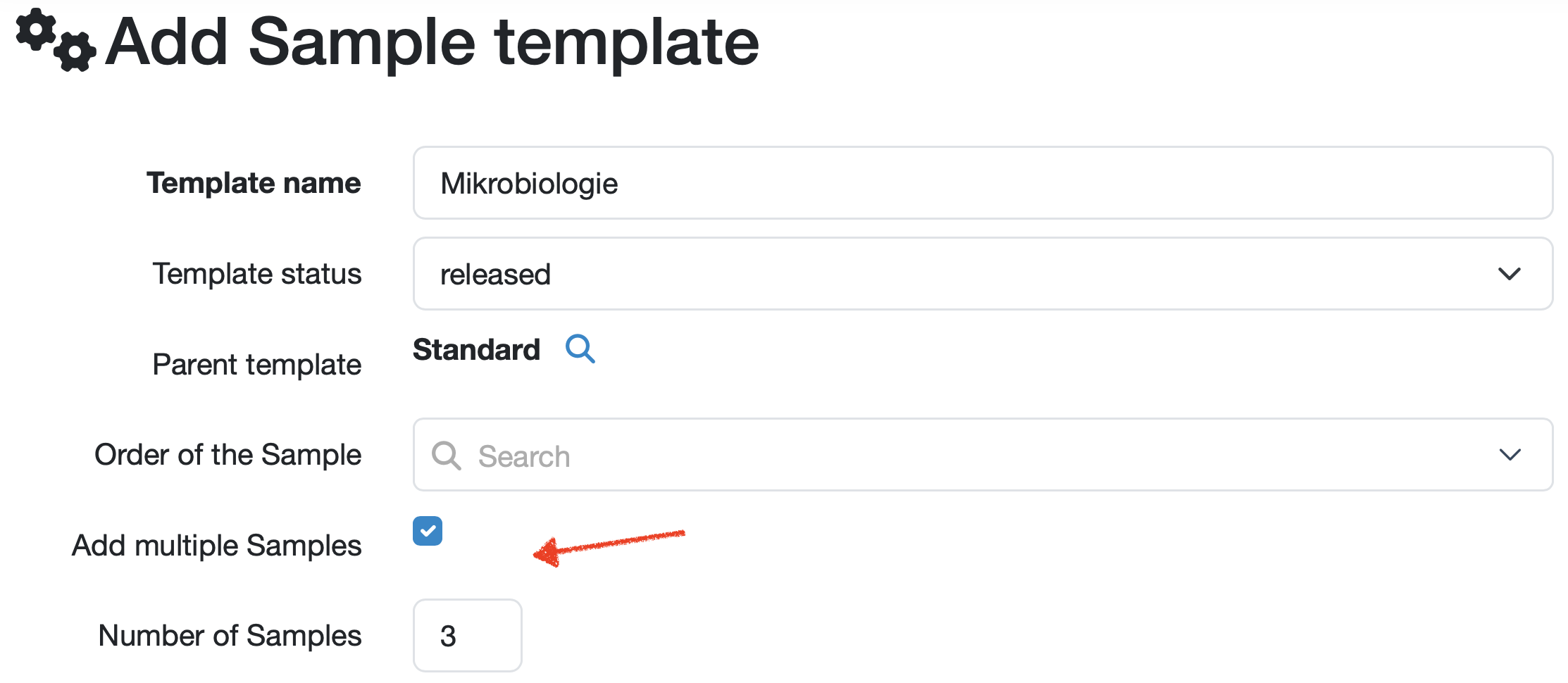
Figure: Add multiple Samples
- If an attribute should be filled individually per sample, enable the checkbox to the right of the respective attribute in the Select attributes section.
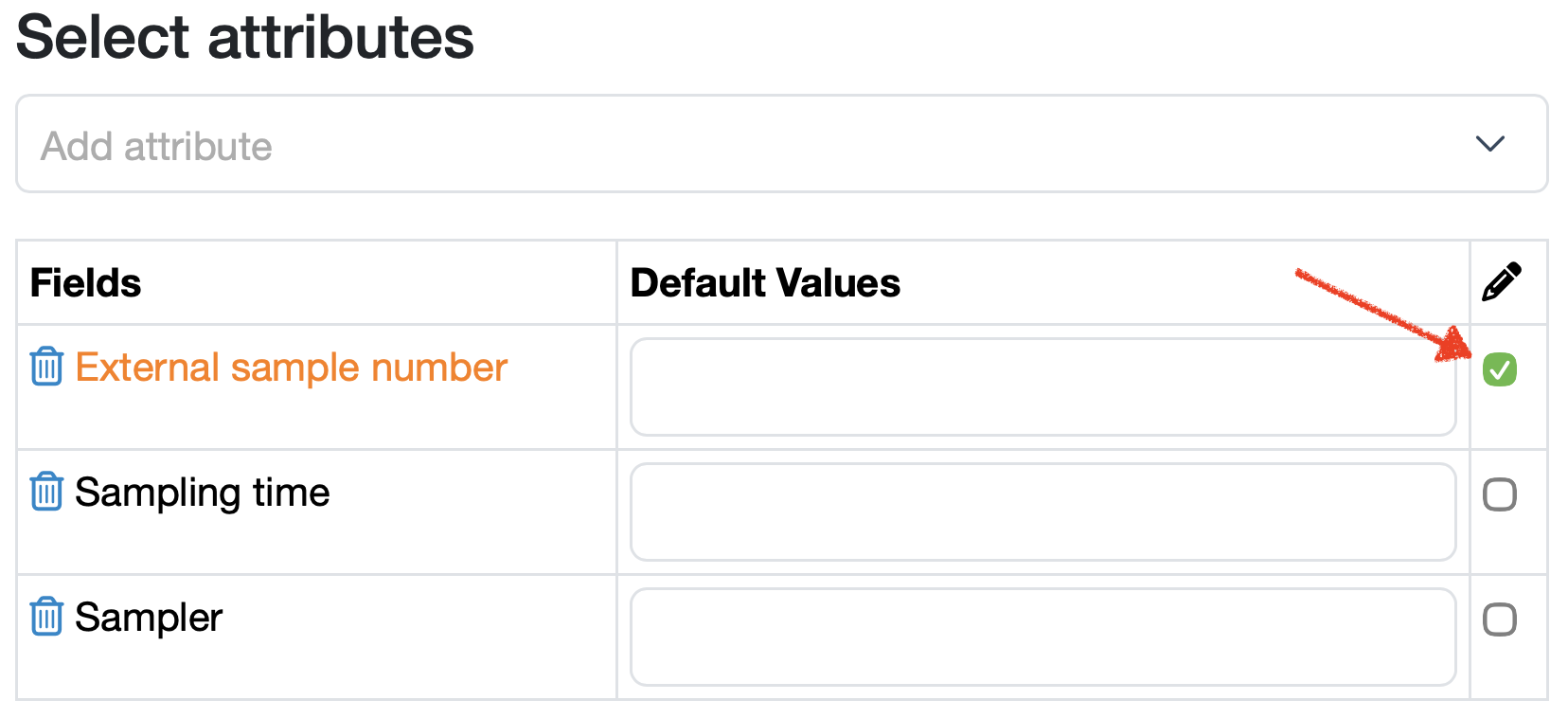
Figure: Fill attribute individually per sample
Note: Use this function for recurring series of analyses where a fixed number of samples with the same basic settings is required.
When creating a new sample using this template, the shared fields (e.g. Order, Date, Employee, Status, Label, Specification, Sampling time, Sampler) apply to all samples simultaneously. Each sample can be filled with an individual Description as well as additional per-sample attributes (e.g. External sample number).
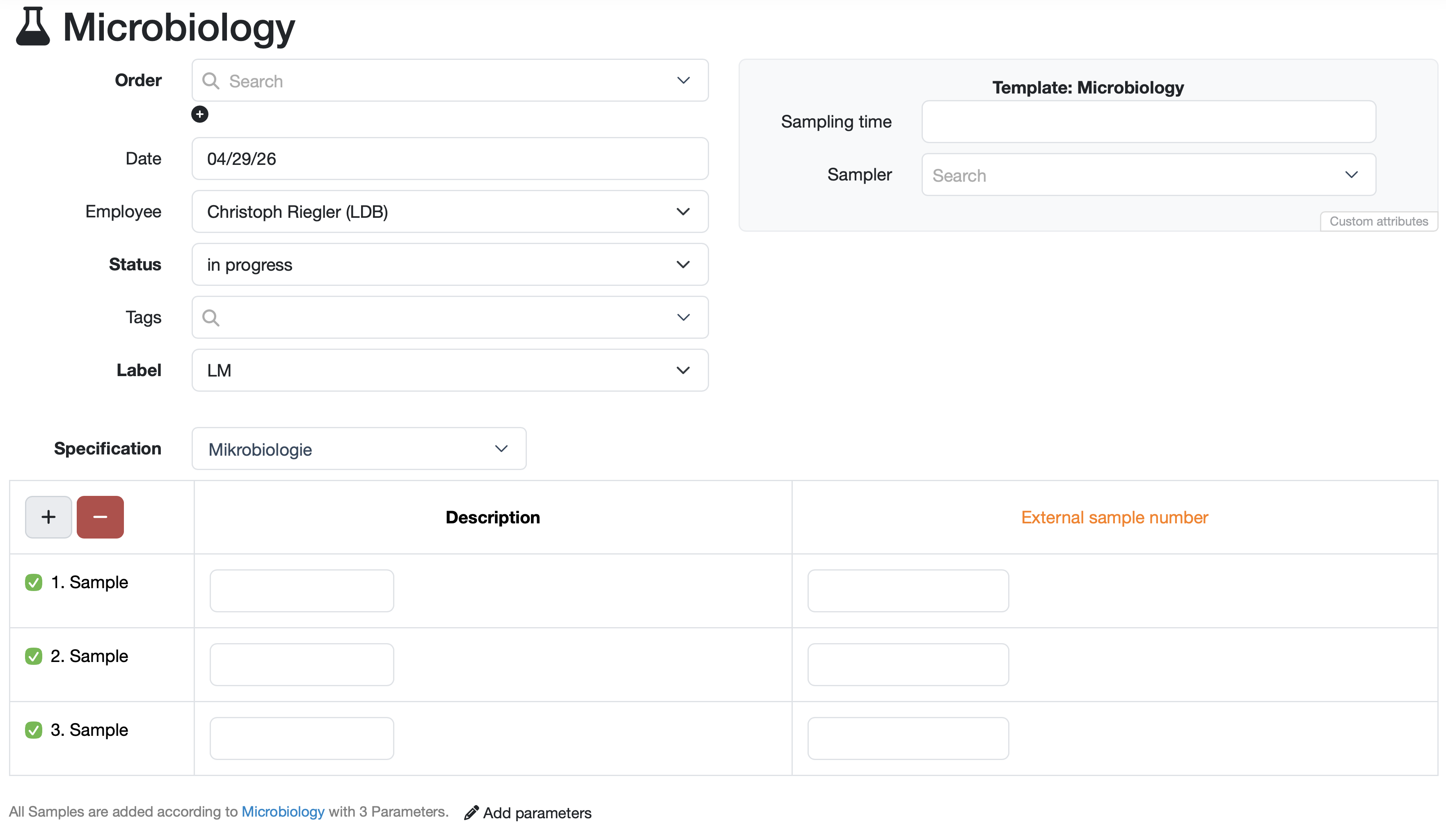
Figure: Sample template for multiple samples