Modular LIMS for accredited and regulated laboratories
LIMS Features at a Glance
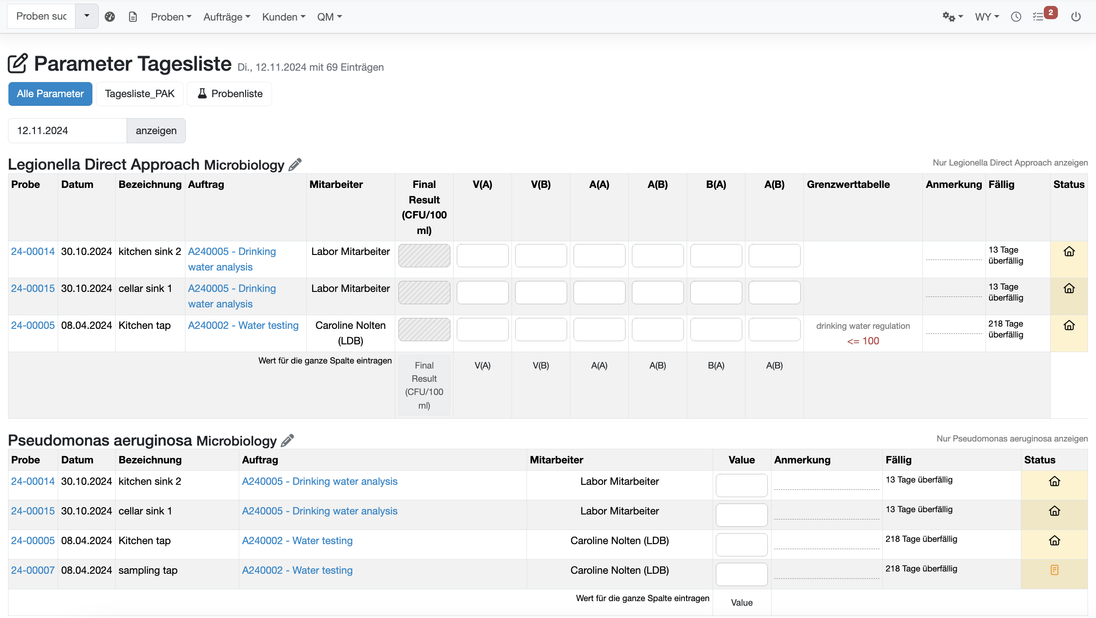
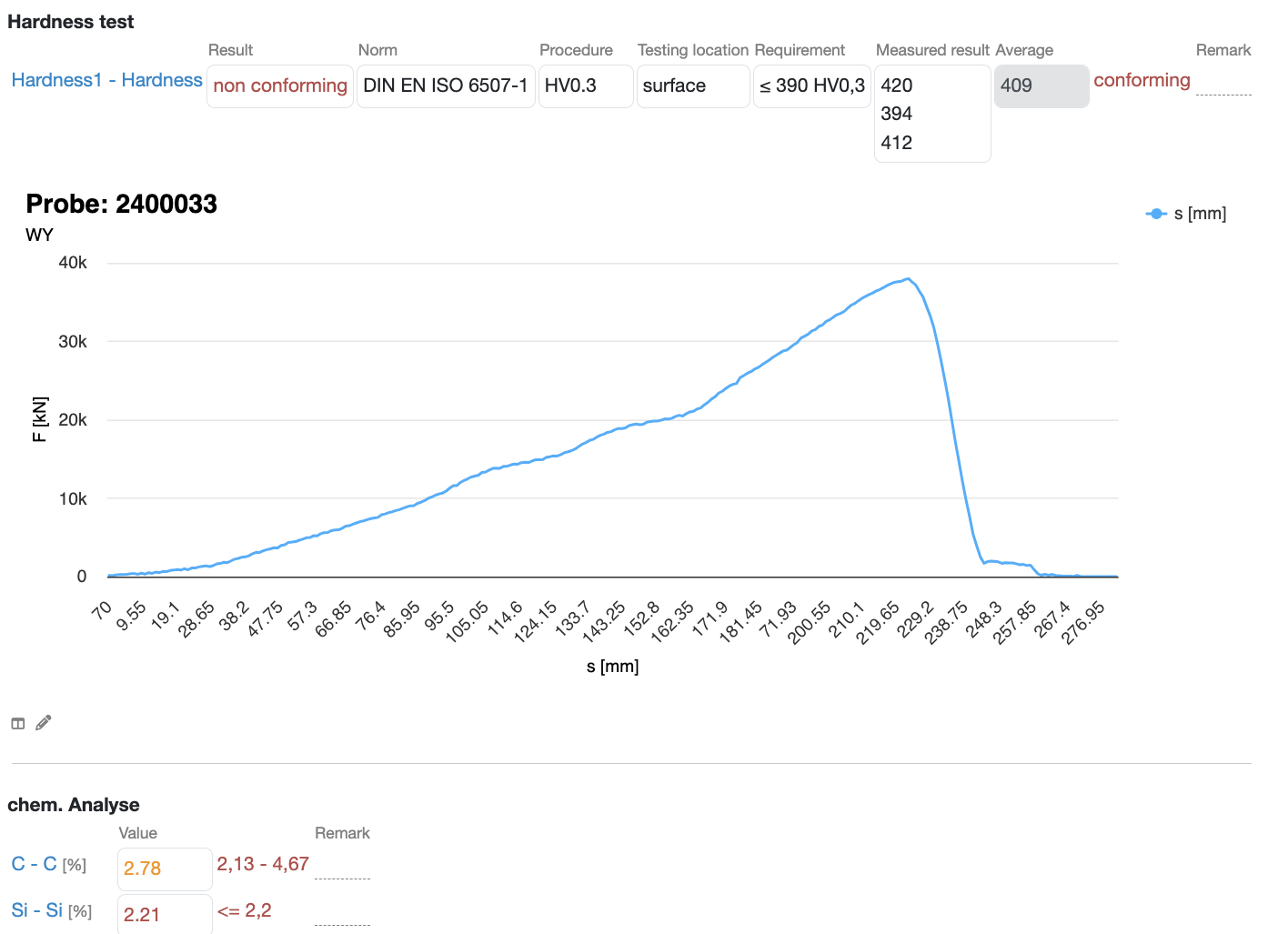
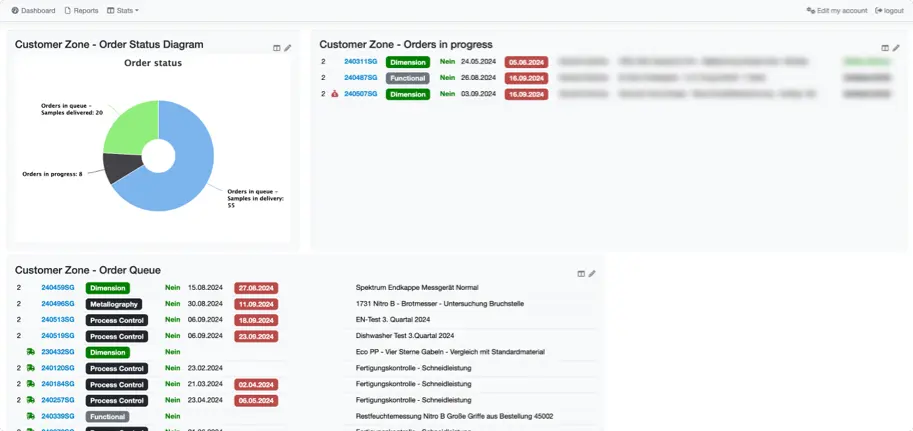
LDB LIMS covers the entire scope of daily laboratory operations—from sample receipt to accreditation-compliant reports. These functions are identical across all industries: Whether it’s water analysis, pharmaceutical QC, or materials testing—every lab needs the same core processes, albeit with different testing methods and additional regulatory requirements.
Your requirements – covered point by point
In an independent market study of contract laboratories, LIMS users cited the range of features as the most important purchasing criterion (32%), ahead of customizability (19%). Every year, we analyze hundreds of requirements from requests for proposals and specifications—the four areas below show which of these LDB LIMS covers.
Behind every function there is a person with laboratory experience
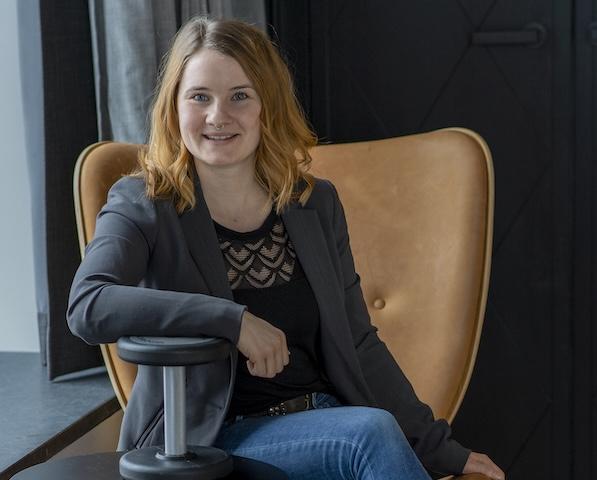
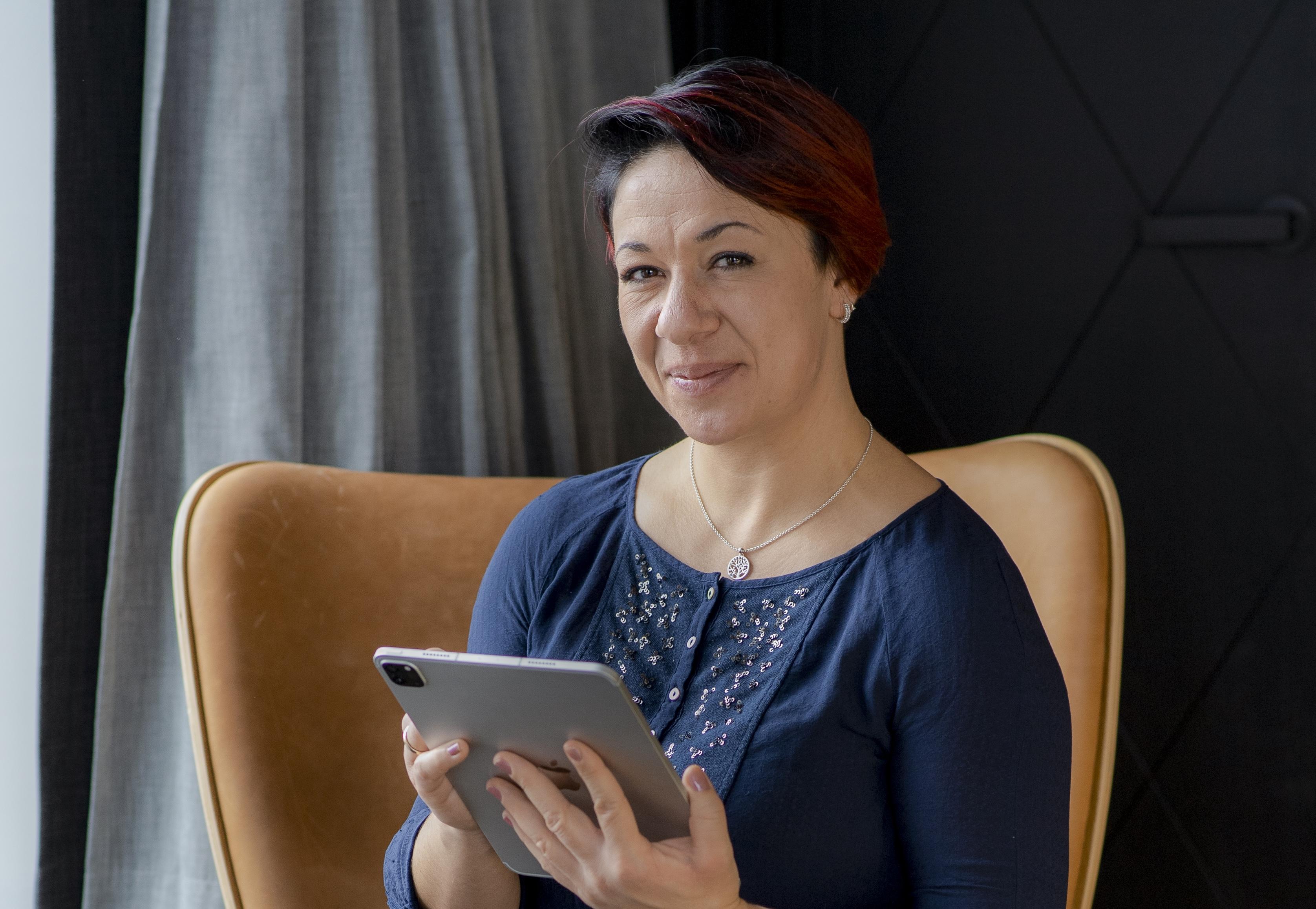
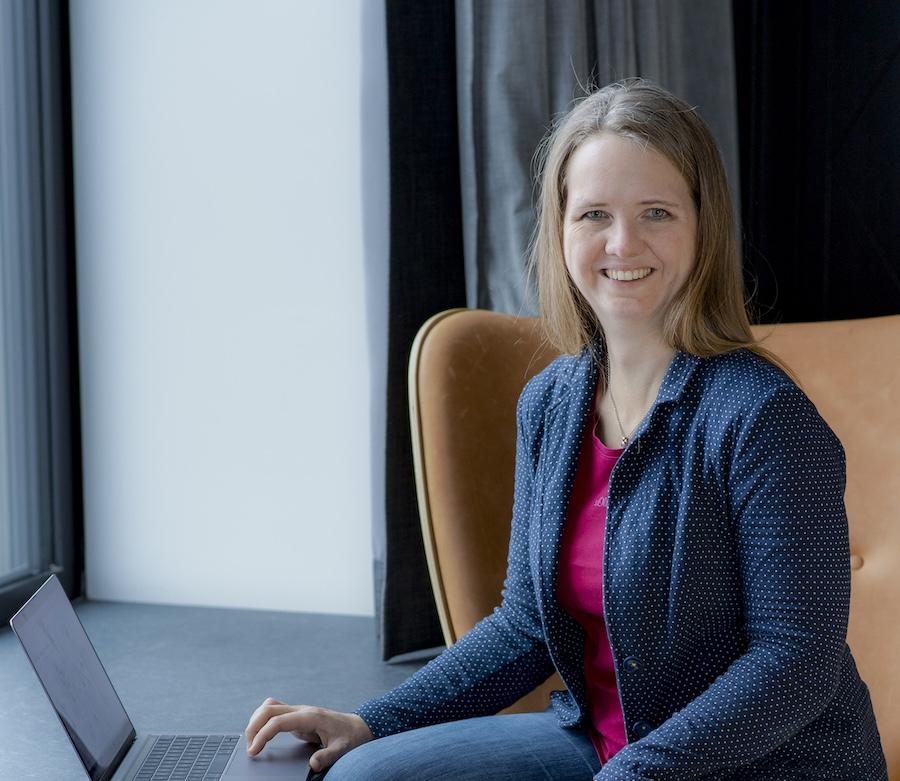
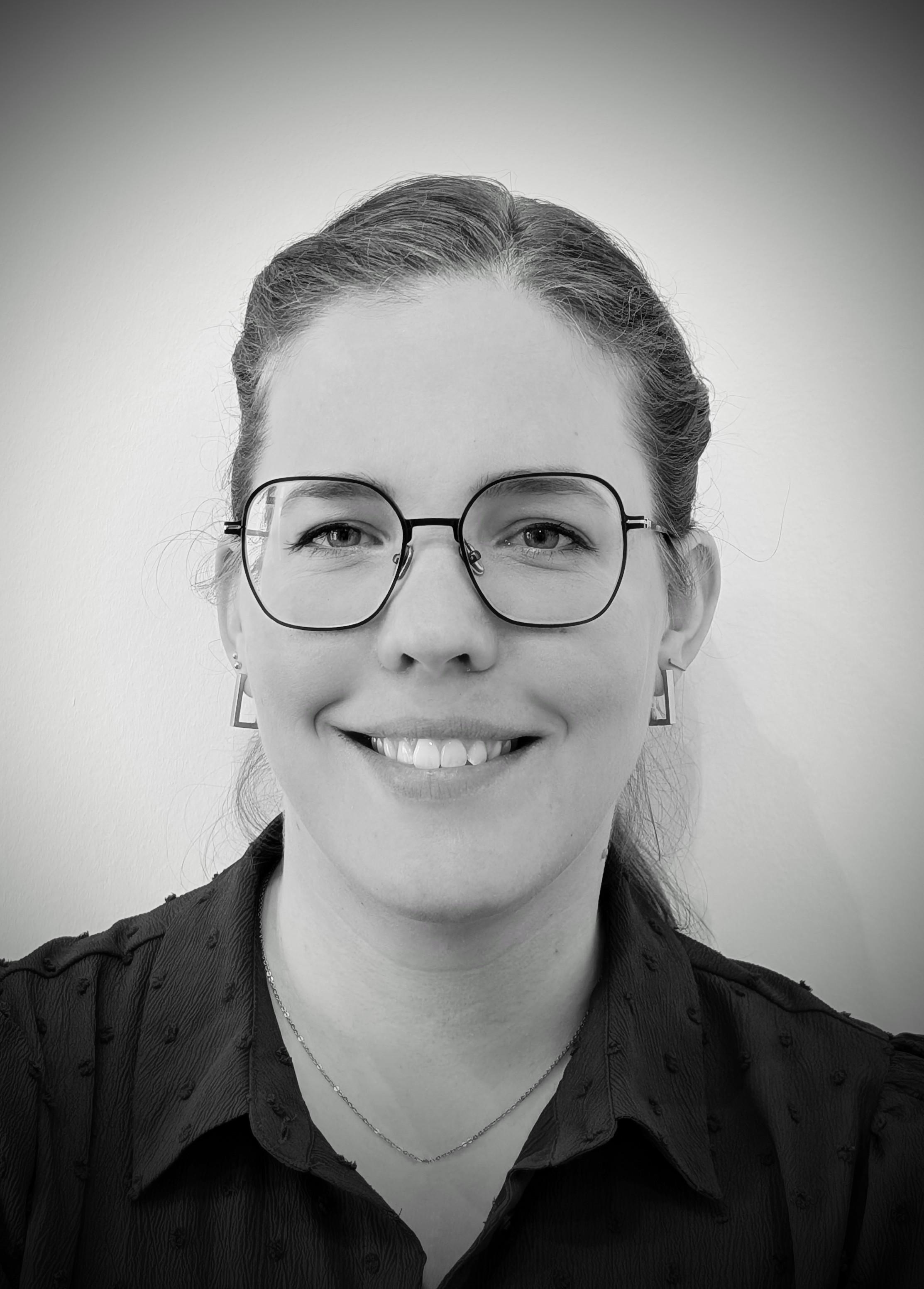
An ambitious team of 17 people with laboratory experience supports you before, during and after your LIMS introduction. Dedicated contacts. Direct access. Every module has an owner and a deputy – not a ticket number, but a name.
Miriam Weyden
Chemical laboratory technicianSamples & parameters
Caroline Harlander
MicrobiologistInterfaces
Julia Liebergesell
MicrobiologistTest reports
Susanne Letsch-Praxmarer
MicrobiologistQM modules
Stefanie Bergauer
Master craftswoman, chemistryBilling & customer zone
Barcodes, audit trail, access rights and AI – four LIMS functions that make the difference in an accredited laboratory
Barcodes, QR codes & labels
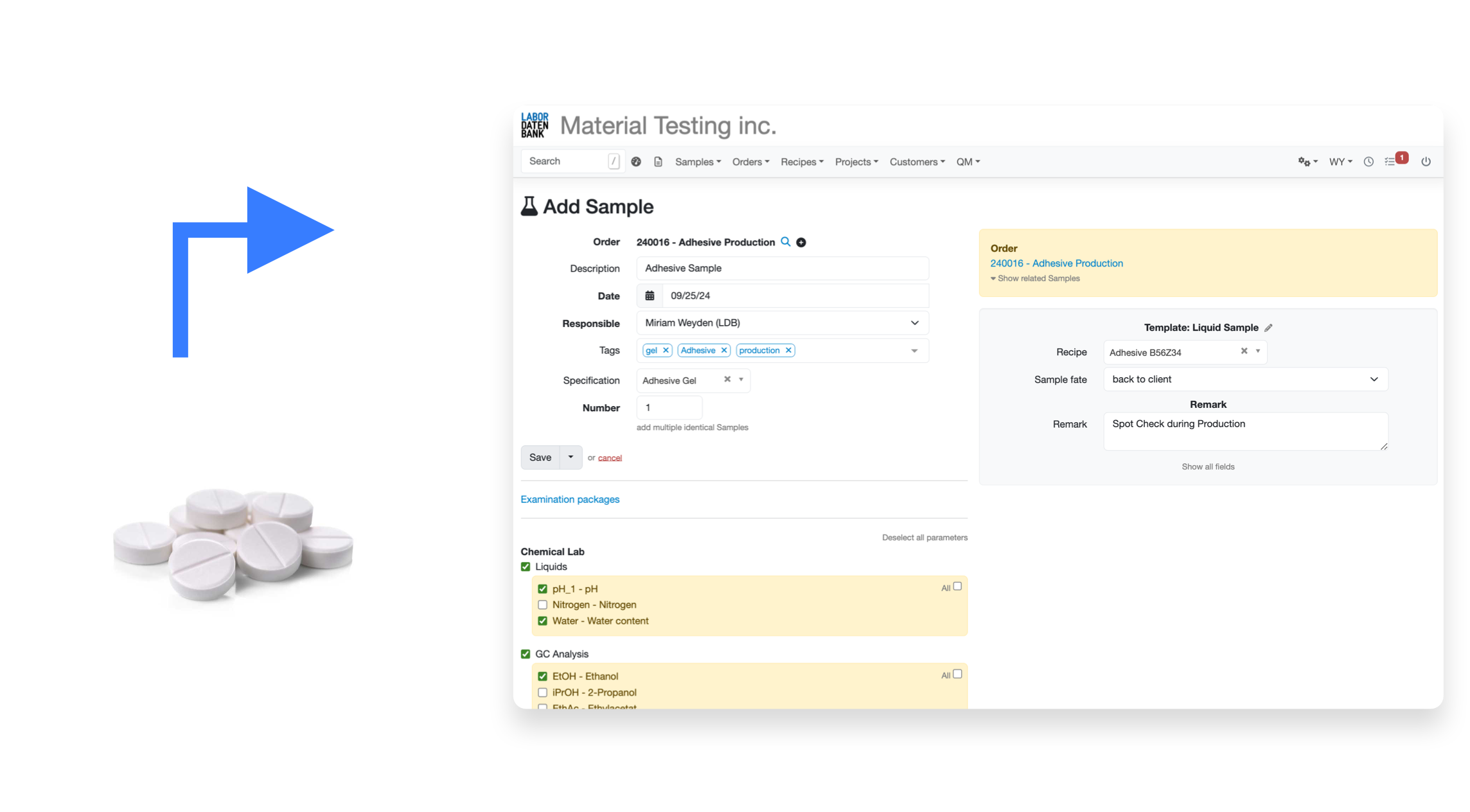
Every sample receives a unique number based on your own numbering system, plus a barcode or QR label. Scanned instead of typed: samples are identified unambiguously, found faster, and mix-ups are ruled out.
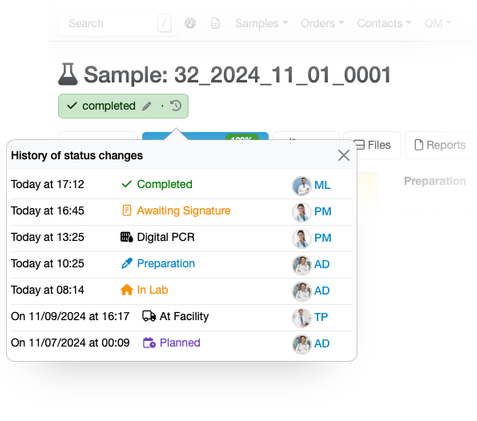
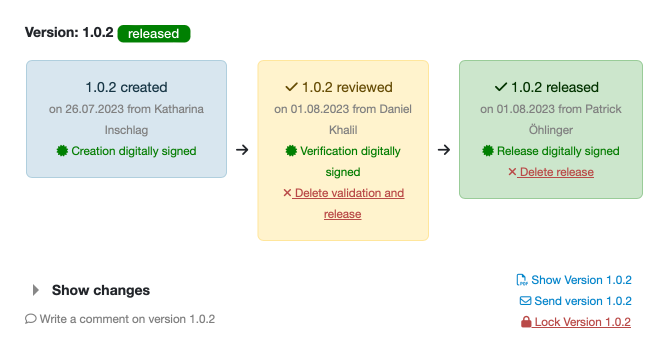
Every entry, change, approval and login is logged automatically with user and timestamp. Original values are preserved and shown side by side in colour – complete, tamper-proof and searchable in full text.
A clear permission matrix controls who may view, create and edit what – per user, group or role. Critical rights can be tied to valid qualifications and require SSO, passkey or MFA.
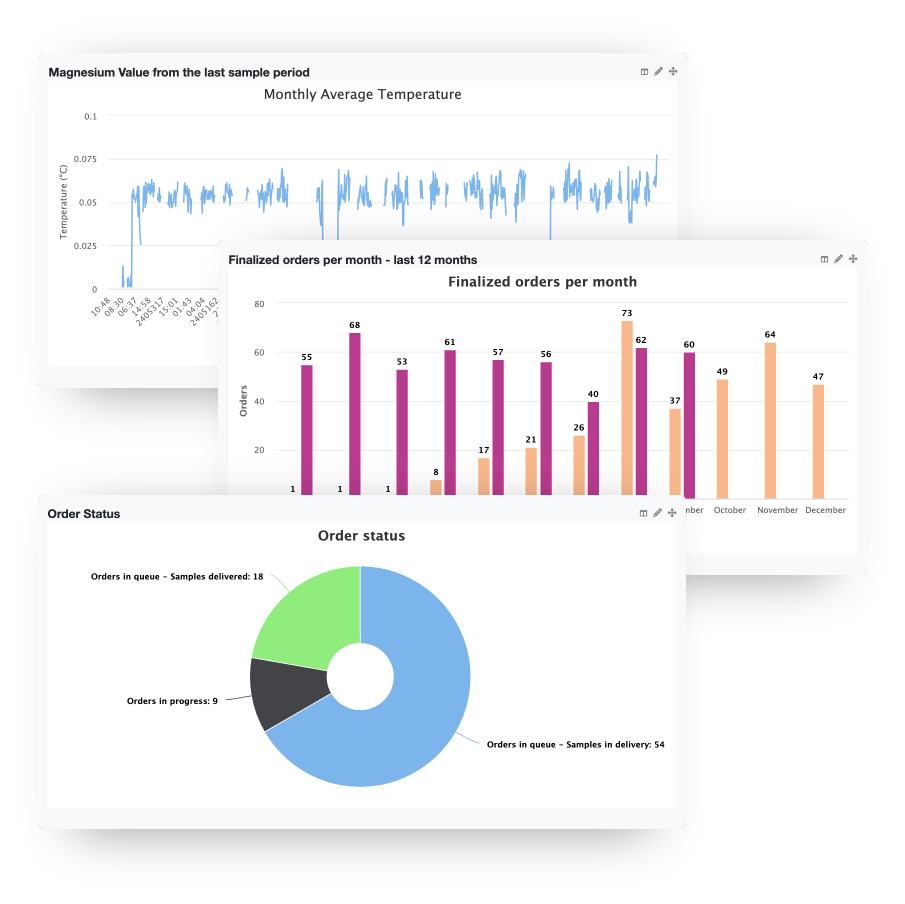
AI imports, Query Explorer and Audit Assistant help with instrument data, evaluations and reviews. You choose the model yourself – no training on your data, encrypted and controlled via access rights.
Laboratory software processes sensitive data. At LDB, security is an integral part of the architecture.
EU data sovereignty
TLS 1.3 + AES-256
SSO & MFA included
99.99% uptime
Backups every second
European provider
A German-Austrian company governed by European law.
Redundant cloud infrastructure
Three independent availability zones in Frankfurt.
Encryption & access protection
All data is encrypted at rest and in transit, with clearly defined access controls.
Secure sign-in
MFA, SSO and passkeys for secure authentication.
Audits & penetration tests
Regular internal and external security audits and penetration tests.
Complete audit trail
Every activity is documented with user details and a timestamp.
As a LIMS provider, we are certified to the current ISO 27001 standard for data security, availability, processing integrity, confidentiality and data protection. We also meet the requirements of the NIS2 Directive.
What laboratories achieve with LDB LIMS — measured, not claimed
26.4 %
average time saved in everyday lab work
26 %
faster sample turnaround
4.3 / 5
overall customer satisfaction
230
laboratories with 5,300 users in 9 countries
Customer survey conducted as part of our ISO 9001 certification, 2025 and 2026 (50 % response rate). Time savings range from 10 % to over 50 % depending on the laboratory. Laboratory and user figures: our own customer base, as of 2026.
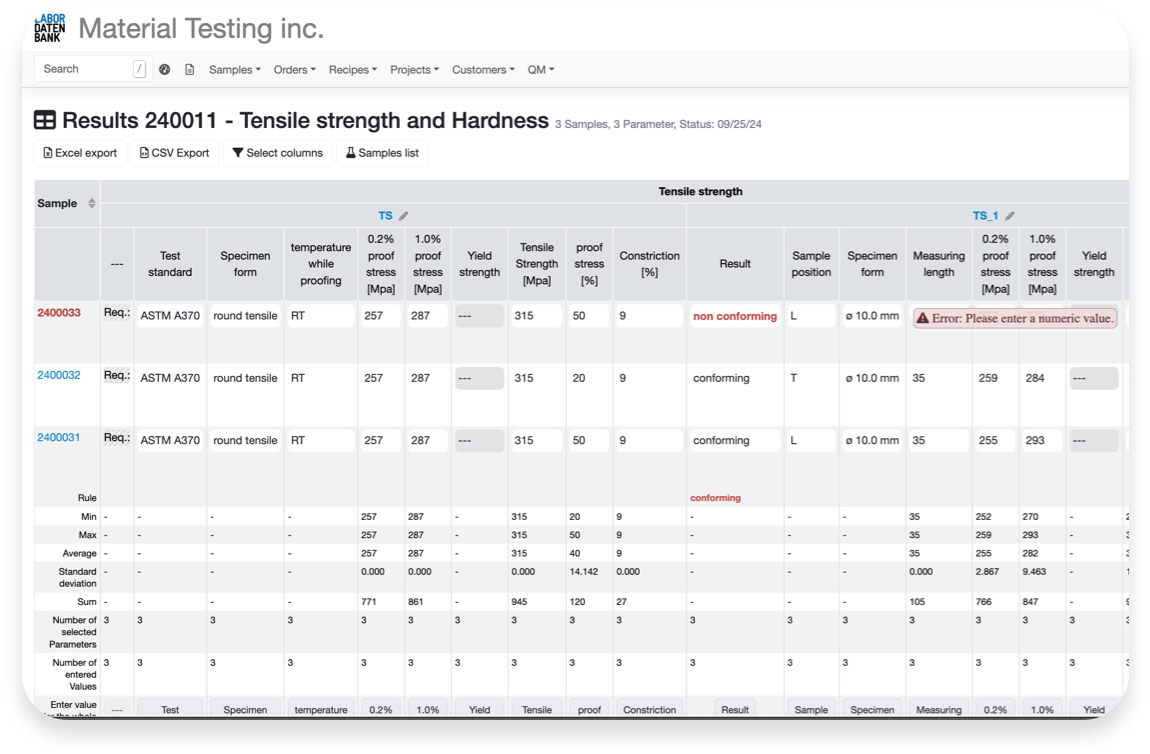
A LIMS maps the journey of the sample: sample registration, definition of the test scope, sample distribution, result entry, result calculation and the final report. Accredited laboratories also need complete traceability of every change, governed access rights and demonstrable validation of the software in use.
Yes. In a demo of 60 to 90 minutes we show LDB LIMS using your own workflows, prepared for your industry. On request we also put you in touch with laboratories already working with LDB.
Yes. For the demo we set up a dedicated demo system in which we model and walk through your process – including configuration, user management and the key admin functions. We are happy to arrange a second session for further team members.
It starts with a kick-off workshop in which we define the approach, drawing on experience from more than 200 LIMS implementations: database model, login and security, access rights, settings and templates. The typical project sequence, effort and timeline are discussed openly during the demo appointment.
Through thematic onboarding workshops run live by our project managers – covering parameters, limits and specifications, test reports, the customer zone, import interfaces and AI, among others. Every workshop ends with an open Q&A, and all dates are published in advance.
Regular online sessions in which we show new releases and features directly in the system – most recently the Fall Release 2026, the SHAPTH interface for drinking water laboratories and connecting AI assistants via MCP. Recordings remain available afterwards.
Yes, a comprehensive online guide to all features—from label printing to status management and dashboard widgets, to SSO login, backups, and IT requirements. It is searchable and is updated with every release.
Smaller than most expect: more than half of our customers had no professional LIMS before, but Excel, Word, Access or paper. That move is our normal case, not the exception, and the implementation process is built around it.
Yes. Master data, parameters, customers and historical results are migrated via the import interface editor. Which data makes sense to migrate, and in what structure, is settled in the kick-off – data migration is part of the implementation project.
LDB LIMS runs as a cloud service: computing power and storage grow with you, without adding servers or moving to a new licence tier. Annual growth in the double digits is the norm among our customers and does not require a change of system.
Every sample receives a unique number based on your own numbering system, plus a barcode or QR label printed directly from the system. Scanning takes LDB straight to the right sample – replacing the typing of numbers and ruling out mix-ups.
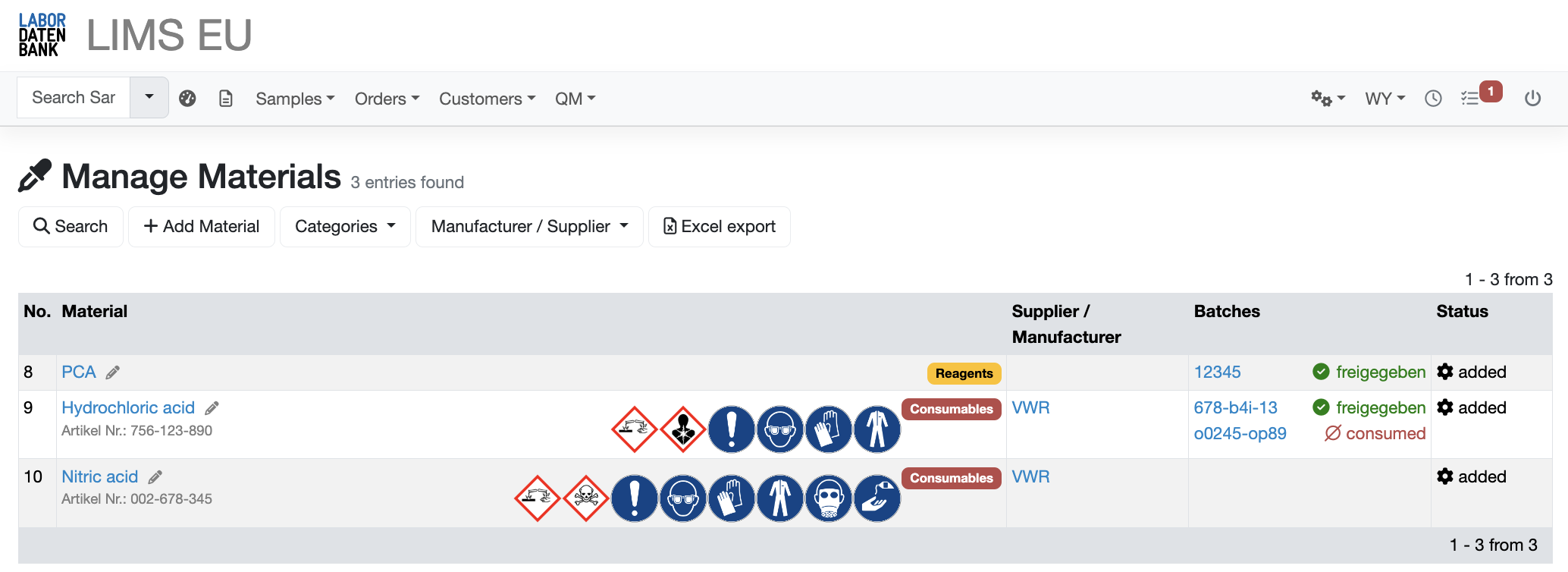
Yes. Document control, equipment management, material and batch management, process management, training plan, qualification matrix, 8D reports and supplier evaluation sit in the same system as the laboratory work. You need no second QM tool and no parallel document storage.
No. Document control in line with ISO 17025 is fully integrated: versioning, approval workflows, read confirmations and the inclusion of external documents. That resolves the familiar problems of a paper, Word and Excel hybrid – outdated versions still in circulation, or hunting for the right passage during an audit.
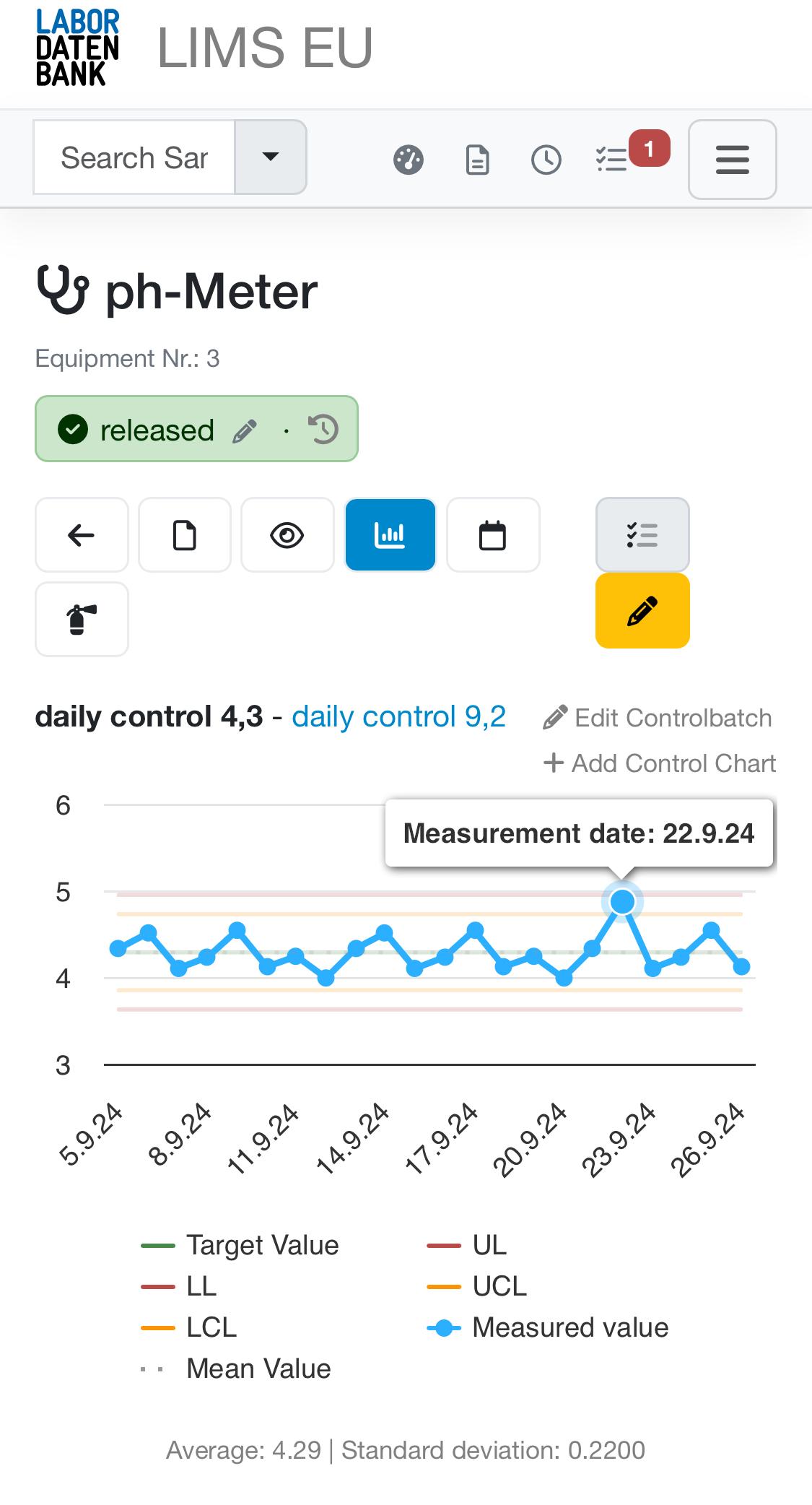
Yes. In equipment management you record instruments with calibration and maintenance dates and are reminded in good time. Control charts are kept in the same module.
Through the training plan and the competence and qualification matrix. Qualifications can be tied to access rights: LDB checks on every access whether the required qualification exists and is still valid.
Yes. 8D reports and supplier evaluation are part of the QM modules, so you process deviations and complaints where the relevant samples, results and documents already are.
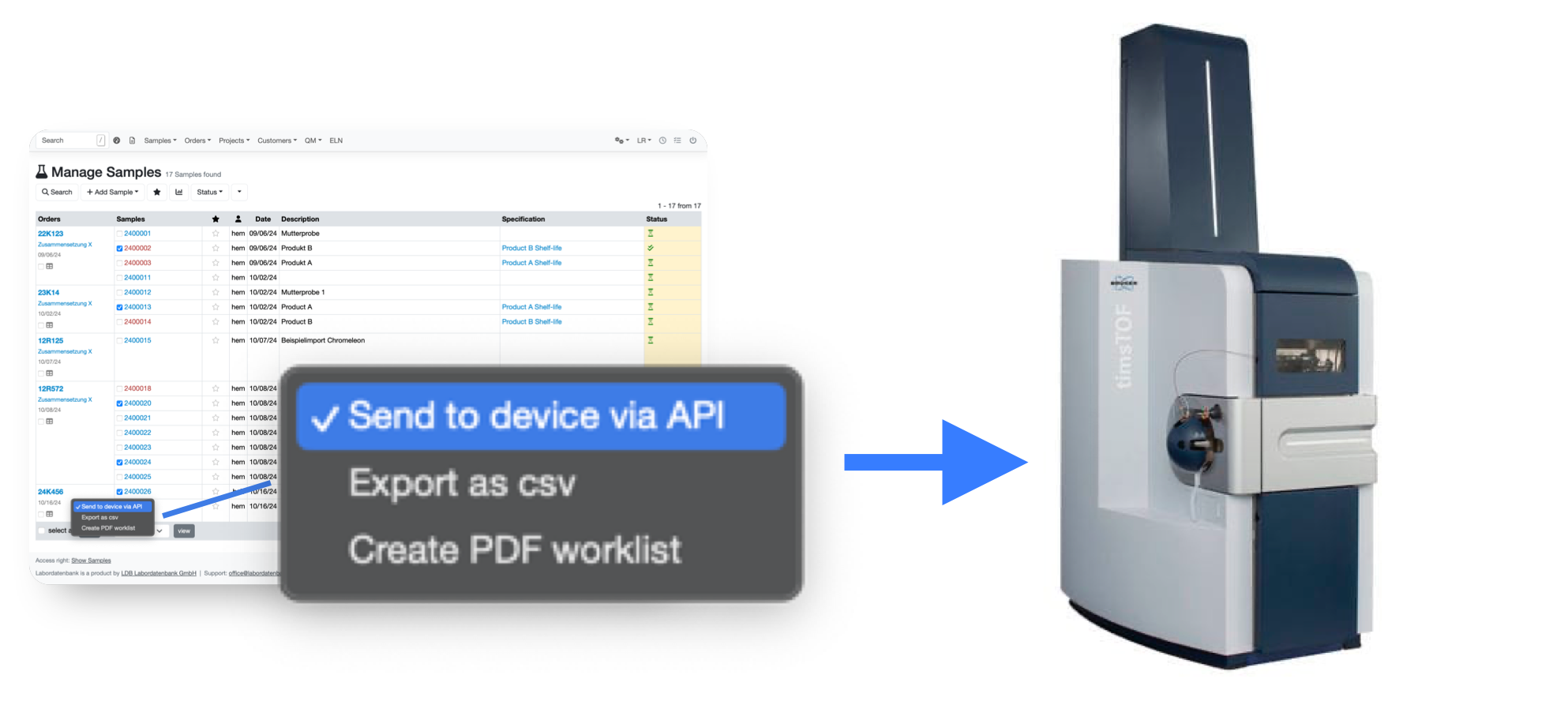
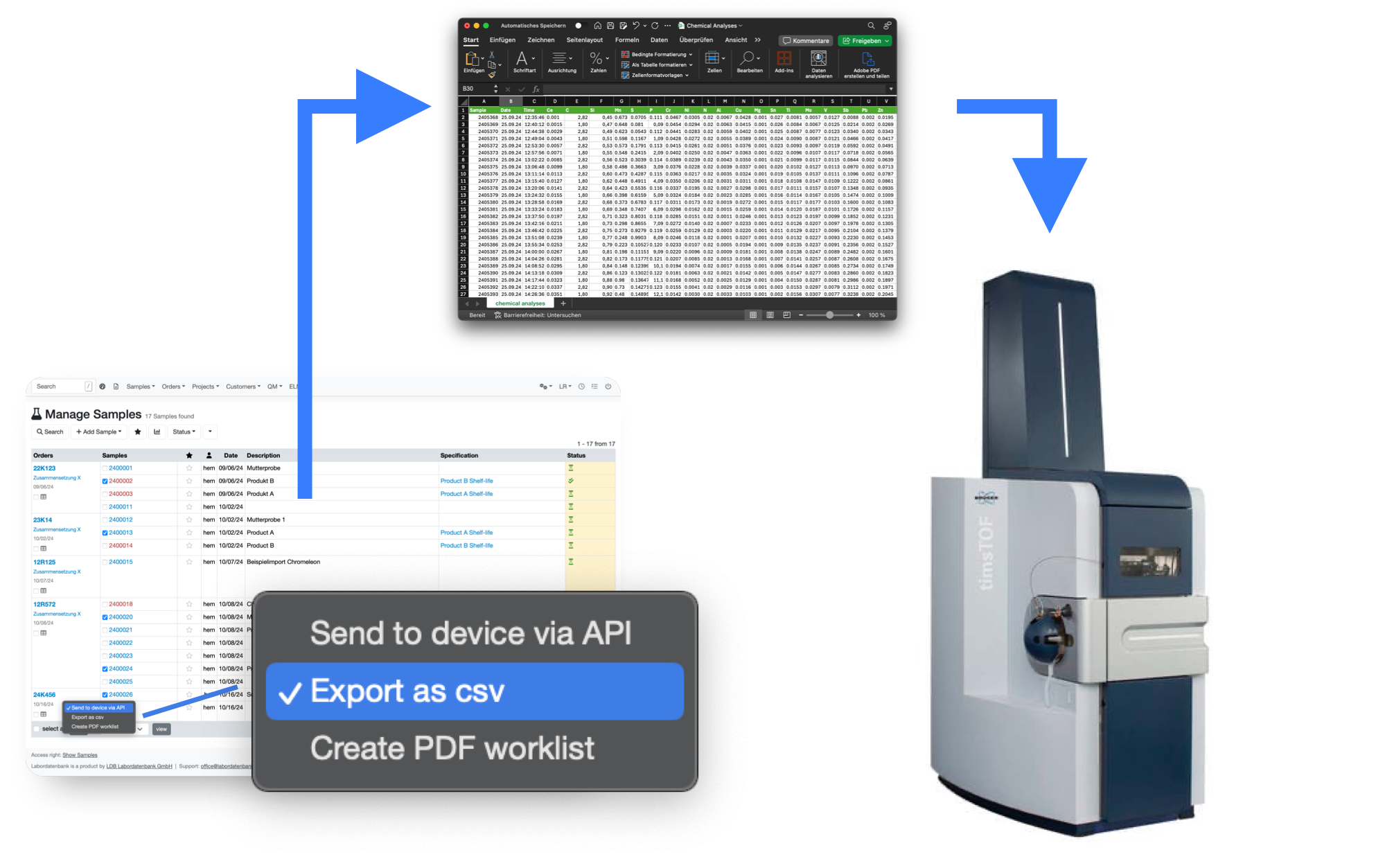
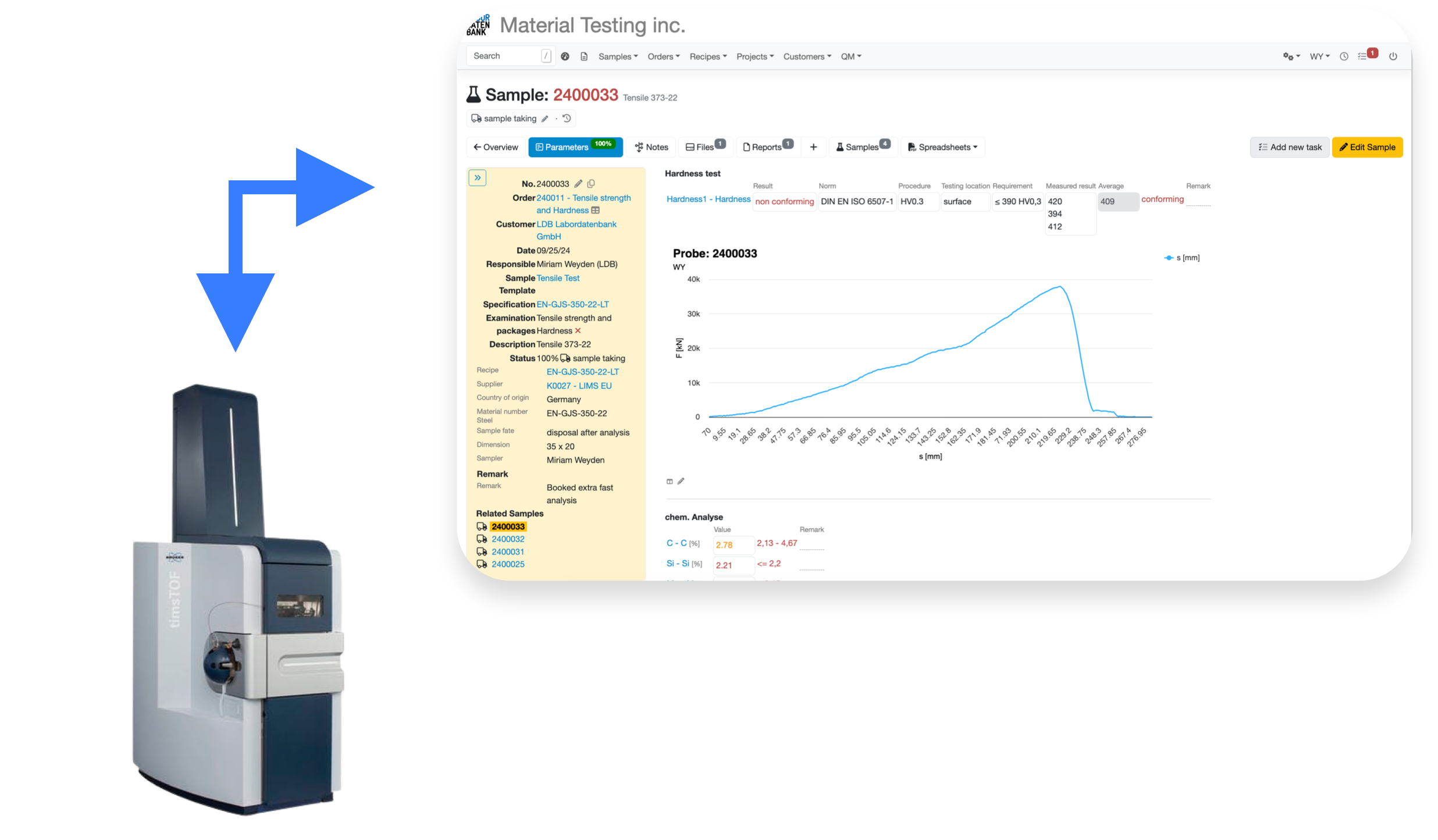
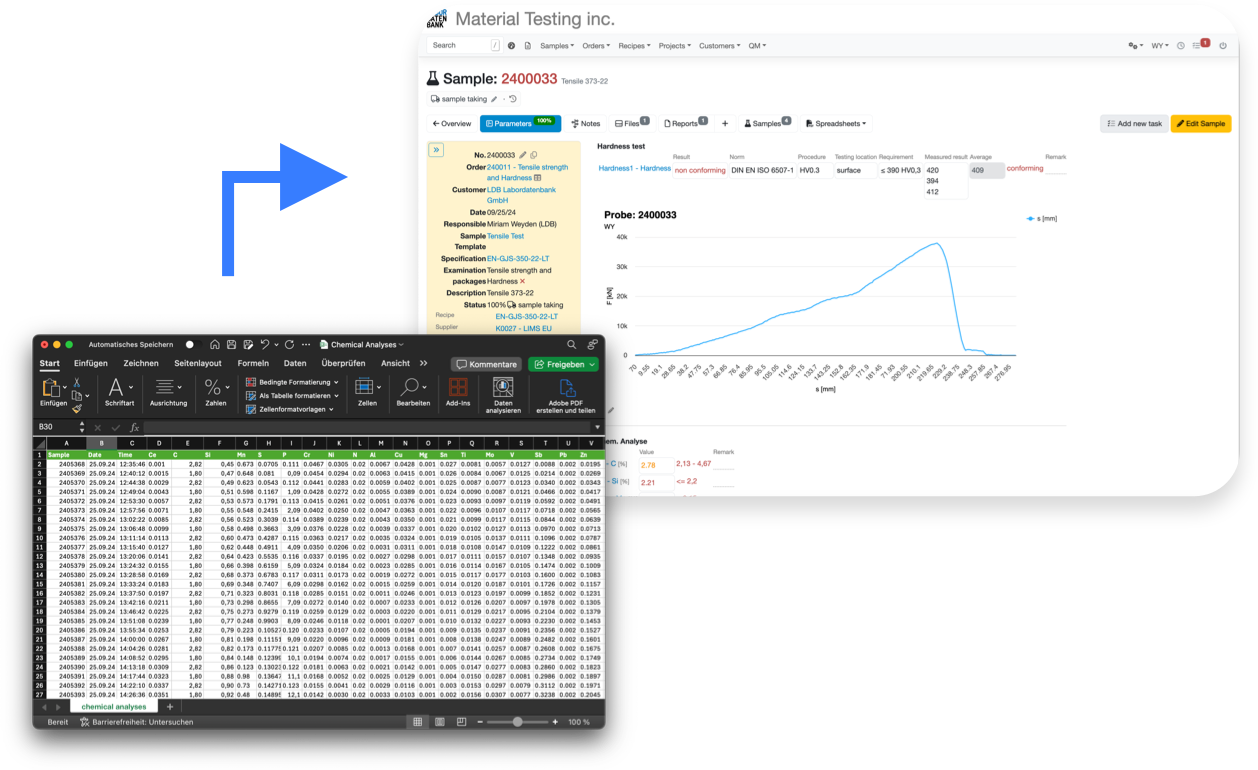
Through the import interface editor. It lets you connect analytical instruments and external laboratories with AI support – without programming skills and independently of your IT department. Readings flow into the system automatically instead of being typed in.
Usually yes. What matters is not the age of the instrument but whether it outputs data in some form – as a file, an export or a printout. You map those formats in the import editor; transfer can run via file, (S)FTP, HTTP(S) or email.
Yes, that is exactly what the AI imports are for: unstructured documents such as sampling protocols or reports from external laboratories are read and assigned to the right samples and parameters. It replaces manual retyping from PDFs – one of the biggest time sinks in everyday lab work.
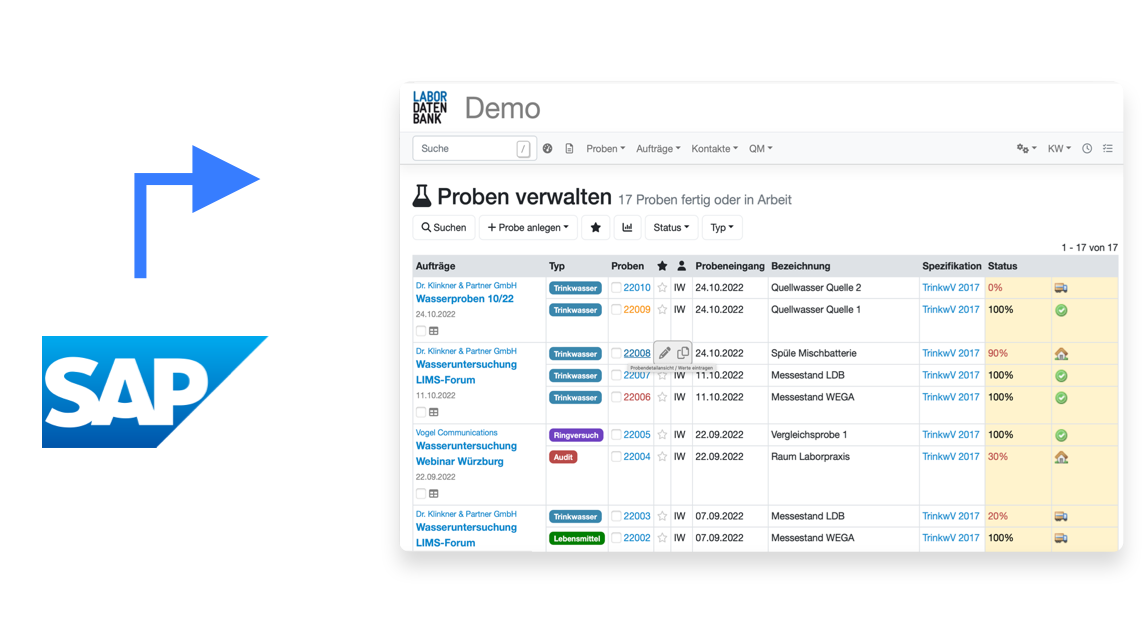
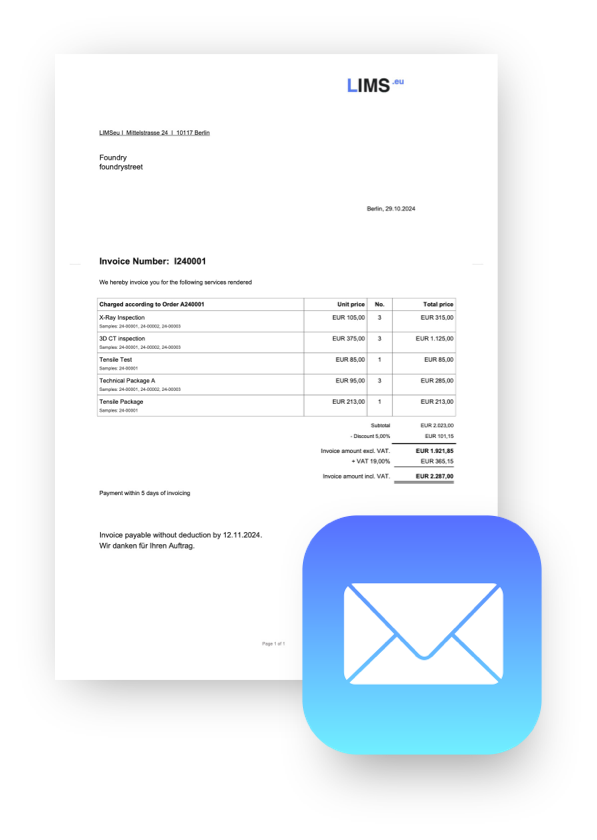
Yes. Productive connections via the REST API exist for SAP and Microsoft Dynamics, among others. For accounting you hand over invoice data in DATEV format, and LDB generates e-invoices to Factur-X and ZUGFeRD.
Yes. Orders, samples and reports can be assigned to departments and sites, and the permission matrix defines per user, group or role who sees and edits which areas – so several sites work in one system without getting in each other’s way.
Yes. The interface is available in several languages, and the Fall Release 2026 added further languages along with custom translations. For laboratories with international sites, every team works in its own language on the same data.
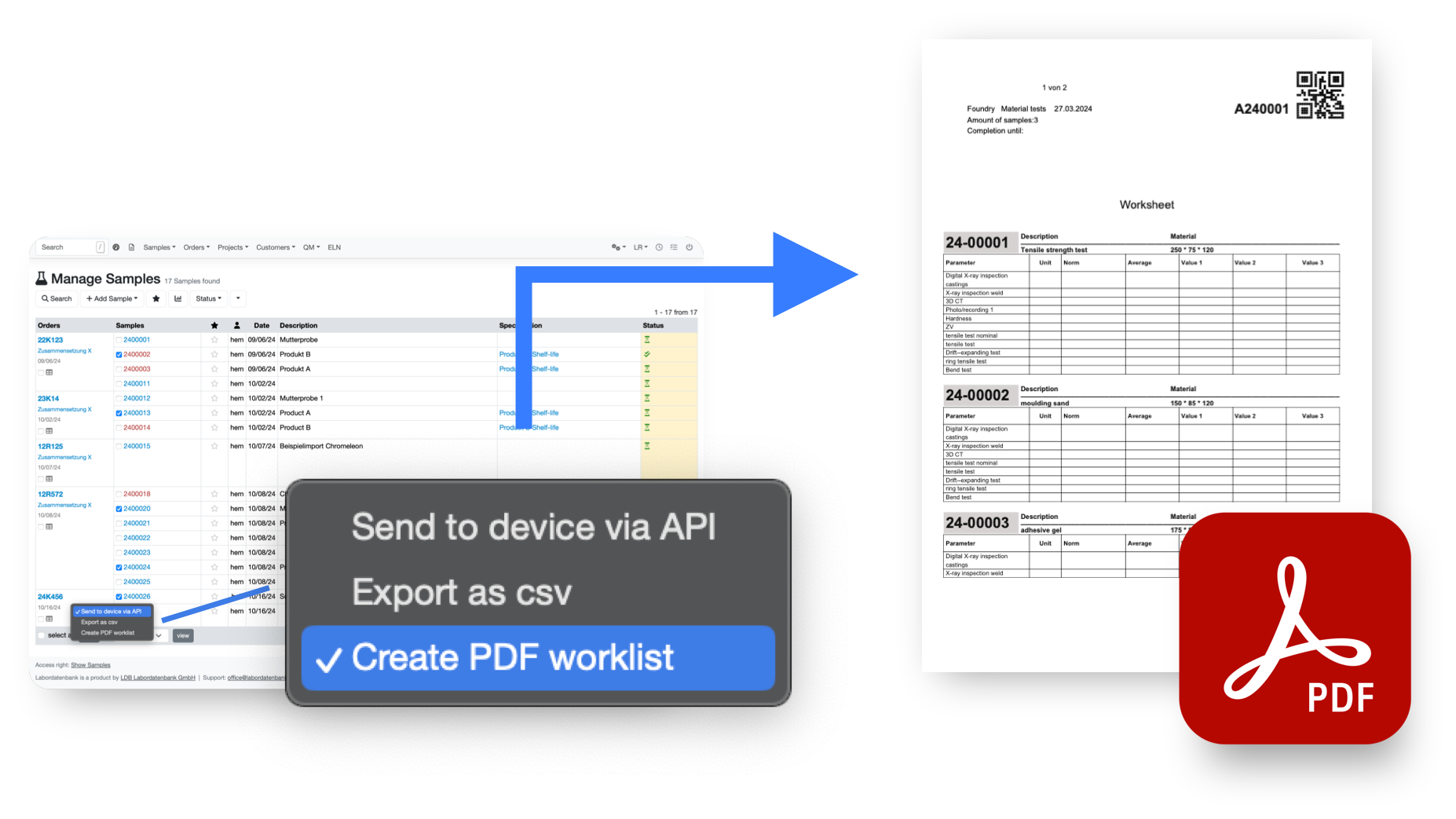
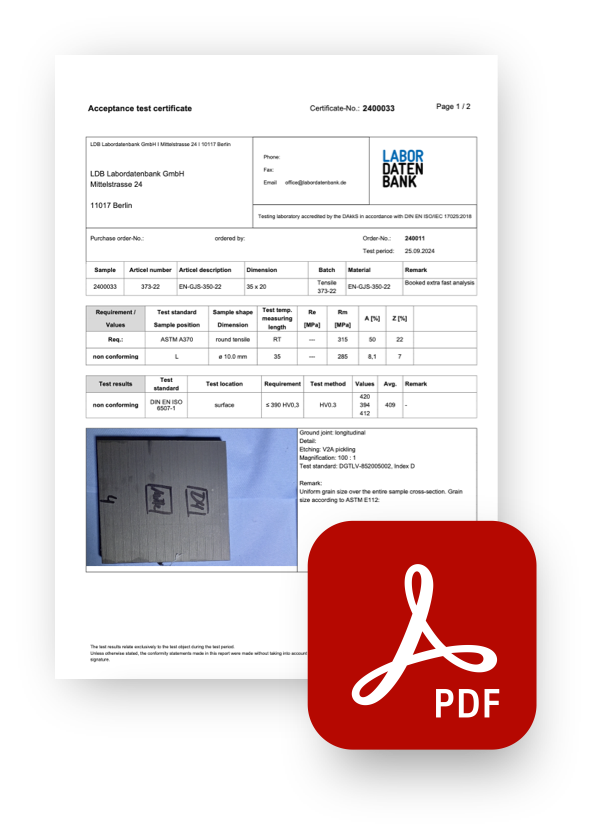
All stored validation tests run automatically once a week and again before every update – each time against both the existing and the new version. Every run is stored permanently as a PDF validation report. You create your own tests for formulas, reports, limits, access rights and evaluations from templates at the push of a button.
Every entry, change, approval and login is logged automatically with user and timestamp. Original values are preserved and shown against the new ones in a colour-coded history. The audit trail is tamper-proof, searchable in full text and available directly on every sample, order and customer record.
Yes. In the customer zone every customer gets their own protected access: registering orders and samples, tracking progress in real time, downloading test reports and raw data. The portal can be embedded in your existing website, and access rights ensure each customer sees only their own data.
Konrad Wagner
konrad@labordatenbank.de +49 (151) 22 33 98 44
Check your requirements in a conversation
You have a requirement specification – let us go through it together.
In 60 to 90 minutes we show LDB LIMS using your own workflows, in a demo system we set up for your laboratory beforehand. We work through your requirement list point by point – including the points we do not cover.