Open the template management via:
Navigation bar → Settings → Templates
Templates can be created not only for samples, but for all supported data types. The process is essentially the same as creating a sample template – the available fields vary depending on the data type and configuration.
Use the tabs above the list to select the data type.
The following data types are currently available (configuration-dependent):
Samples, Examination packages, Orders, Contacts, Recipes, Specifications, Asset, Subasset, Local inspection, 8D report, Materials, Batches, Equipment
Note: Different templates are optional. They are particularly recommended when recurring types each require their own attributes or default entries.
Order templates allow frequently used order types to be saved with predefined attributes and default entries.
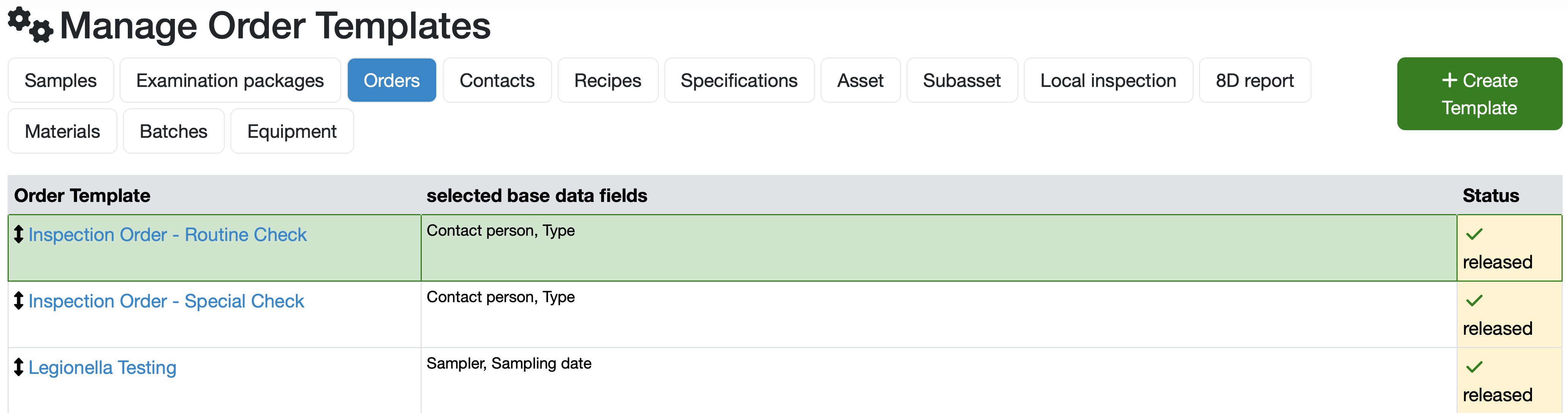
Figure: Manage Order Templates
The list of order templates shows for each template:
Released order templates appear directly in the navigation menu under Orders, enabling quick creation of a new order based on a specific template – so that only the fields relevant to that order type are displayed.
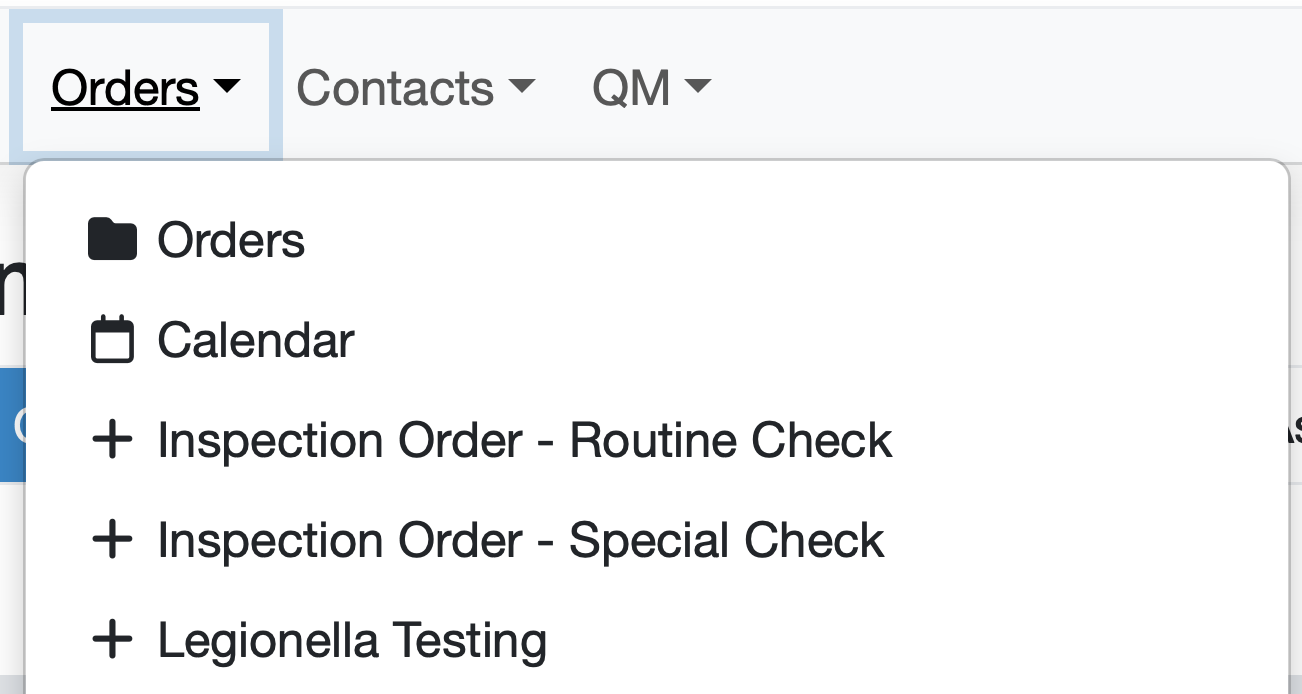
Figure: Template selection in the navigation menu
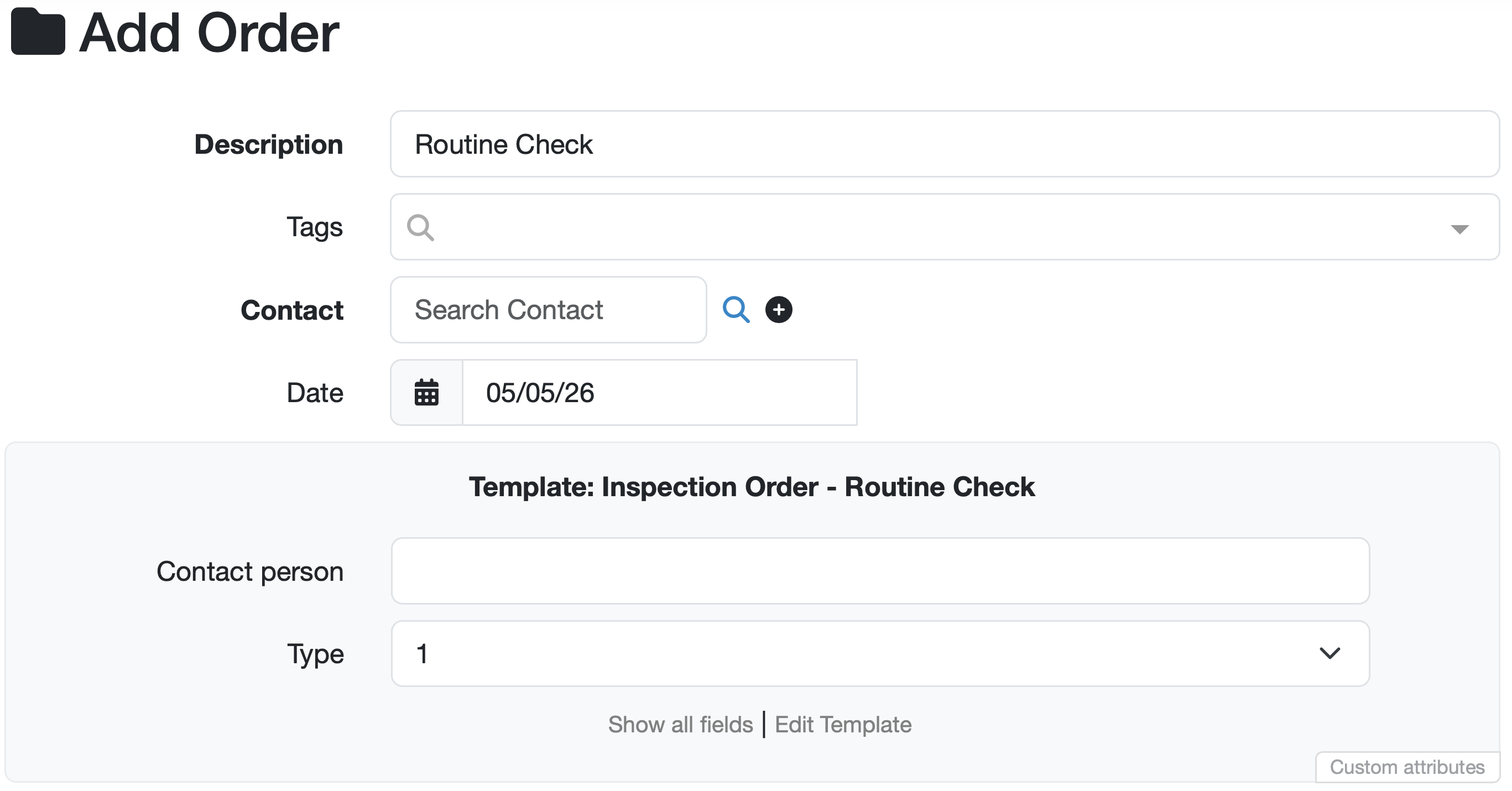
Figure: Adding an "Inspection Order - Routine Check" – Default entry: Type 1
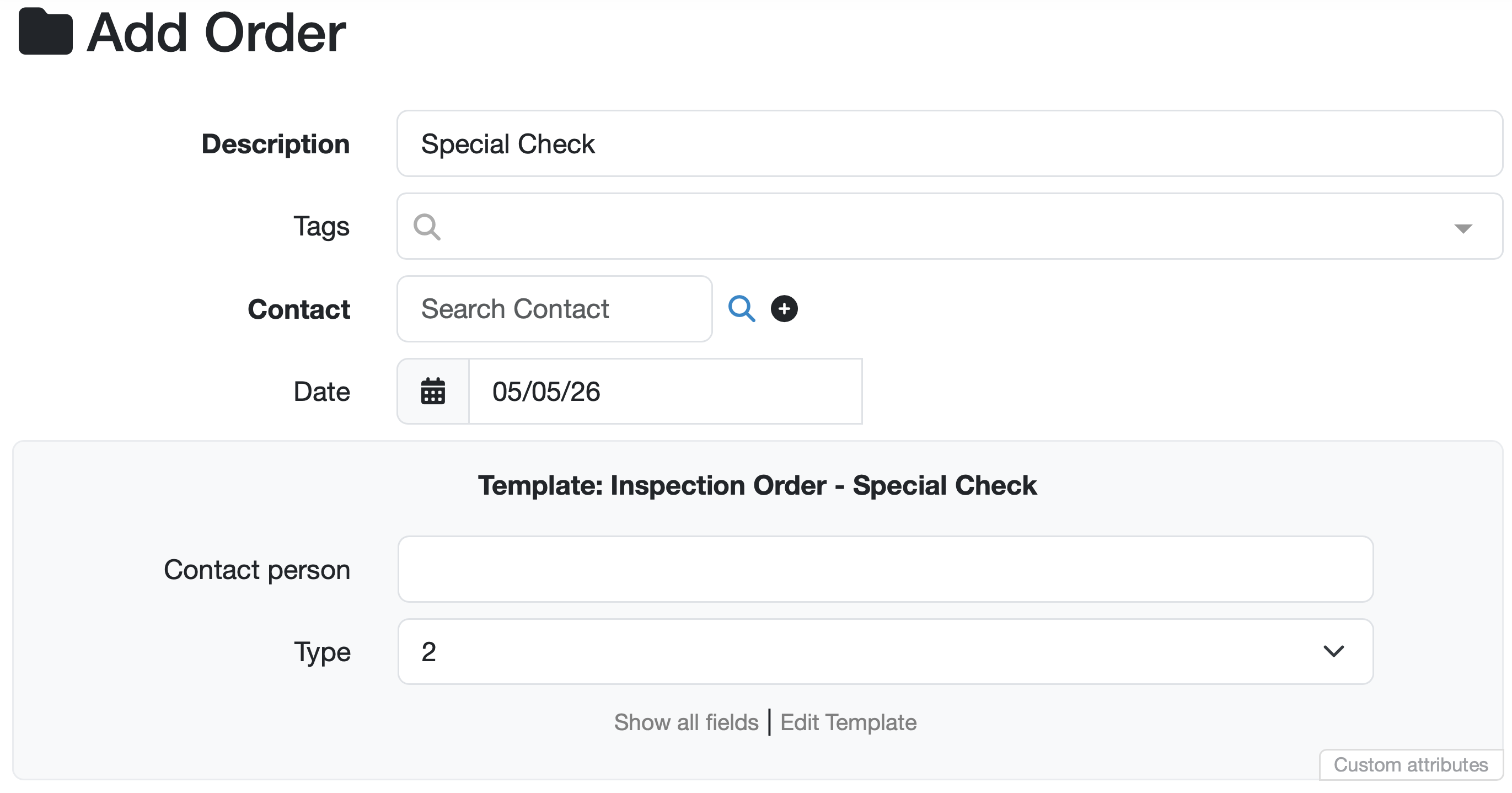
Figure: Adding an "Inspection Order - Special Check" – Default entry: Type 2
Customer templates allow frequently used customer types to be saved with predefined attributes and default entries.
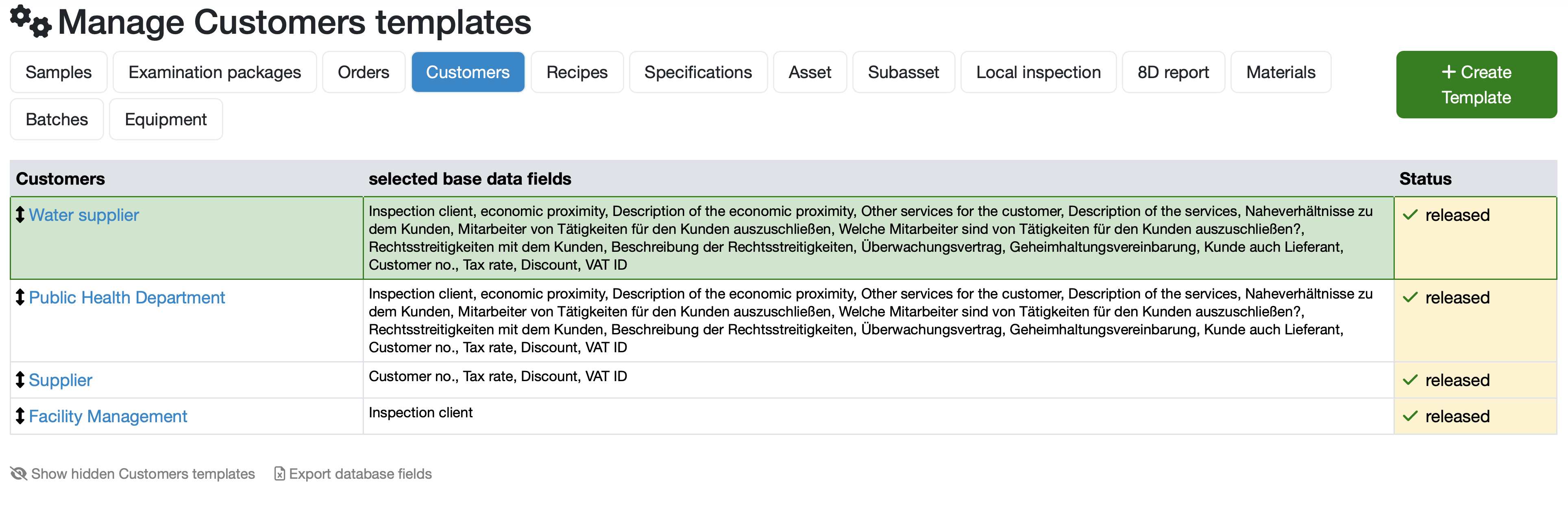
Figure: Manage Customers templates
The list of customer templates shows for each template:
Comparing the templates illustrates how significantly the scope of attributes can differ depending on the customer type: while the Supplier template contains only the fields Customer no., Tax rate, Discount, and VAT ID, the Water supplier and Public Health Department templates include a considerably larger number of fields – such as economic proximity, Inspection client, or Confidentiality agreement.
Customer templates can be assigned to a Category. For example, the Supplier template is assigned to the Supplier category, which influences how the customer is classified in the system.
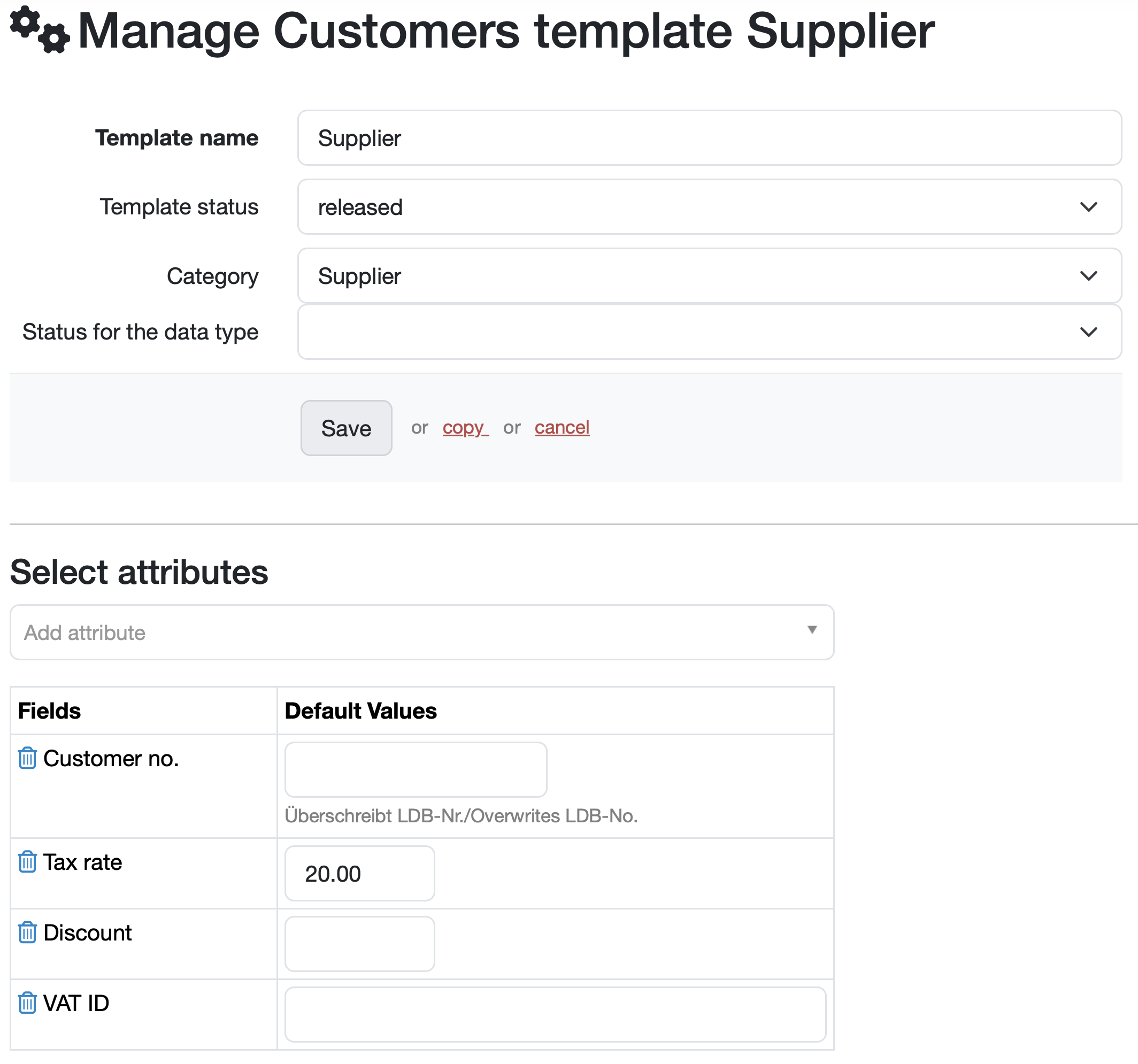
Figure: Customers template "Supplier" – category and configured attributes with default values (e.g. Tax rate: 20.00)
Released customer templates appear directly in the navigation menu under Contacts and enable quick creation of a new customer based on a specific template – displaying only the fields relevant to that customer type.
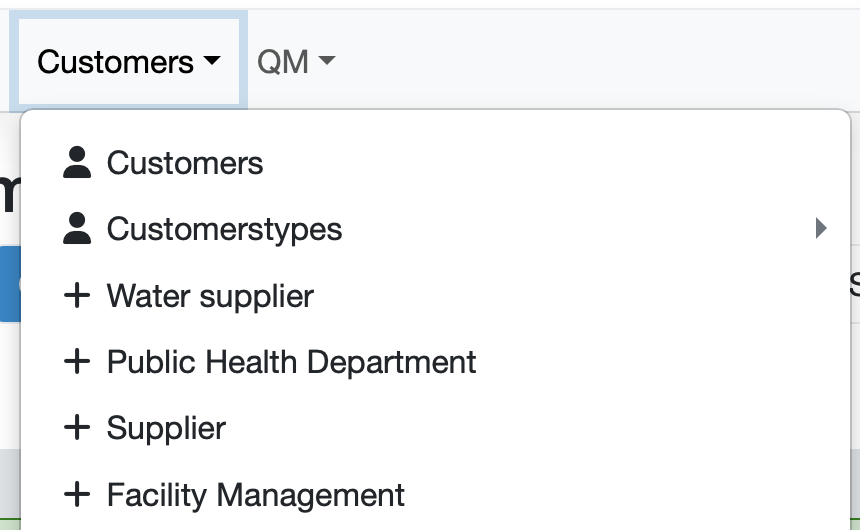
Figure: Template selection in the navigation menu
Materials templates allow frequently used material types to be saved with predefined attributes and default entries.
Templates can optionally be organized into parent categories and child templates. This allows related types to be grouped together in a clear and structured way.
A well-thought-out structure simplifies day-to-day work.
The Materials template management provides an example of such a structure:
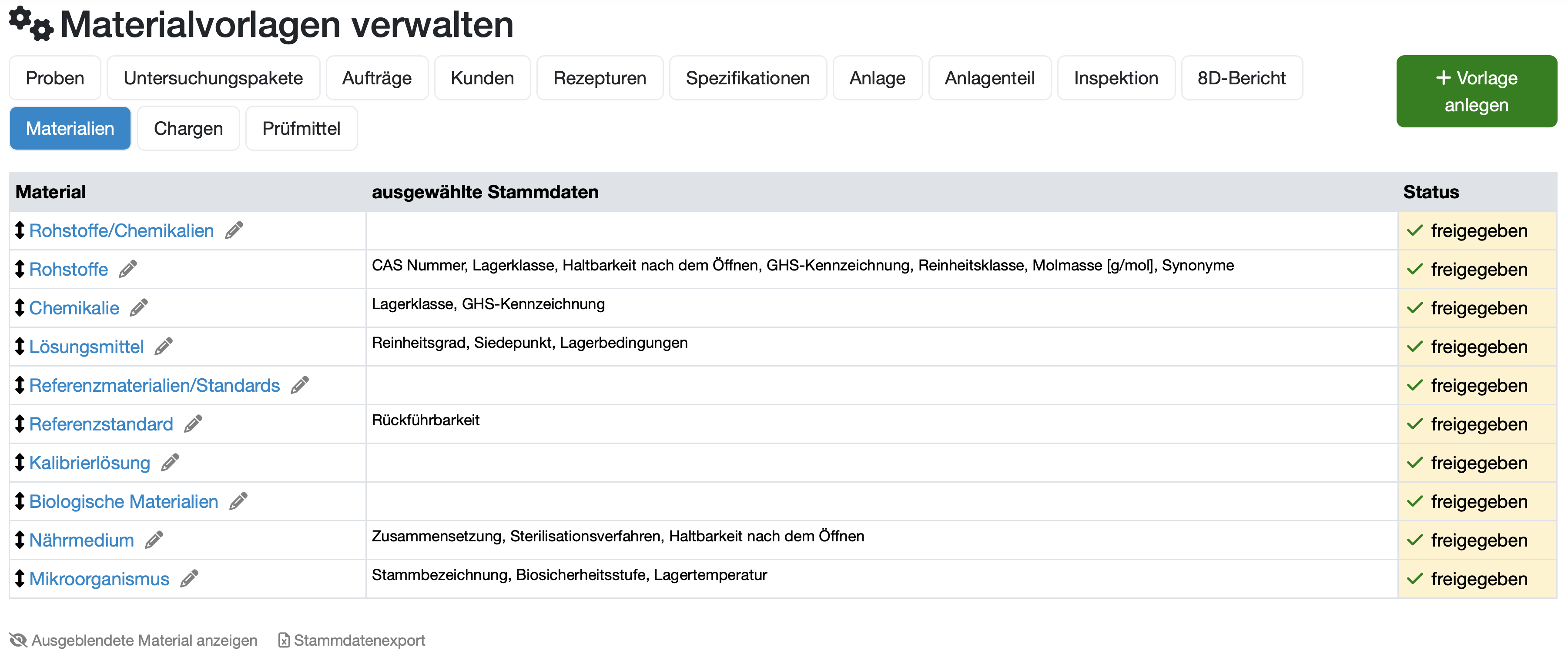
Figure: Manage Materials templates
The hierarchical structure is also reflected when creating a new record. The parent template is selected first, followed by the appropriate child template.
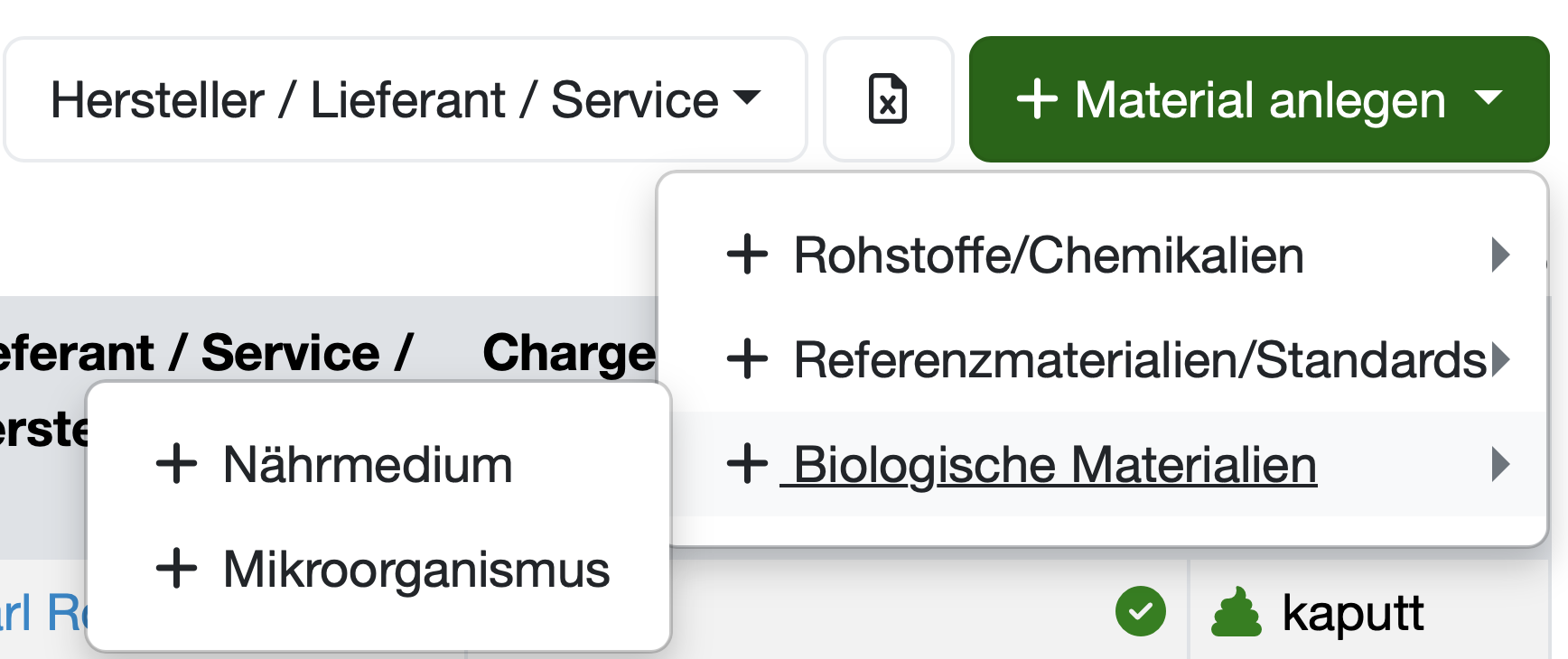
Figure: Template selection when creating a new material
Last change: 10/14/26
General information
8D-report
Supplier evaluation
Material
Employees
Customers
Orders
Samples
PDF templates
Assets
Recipes
Reports
Report table editor
Interfaces
AI functions
Introductory phase
Query reports
Templates
Client zone (optional)
Offers
Invoices
Parameters
Calculating with parameters
Webservices
Transformationscode
Test plans / limit values / specifications
Documents control
Questions and answers
Equipment
Trainings
Others
File management
Processes