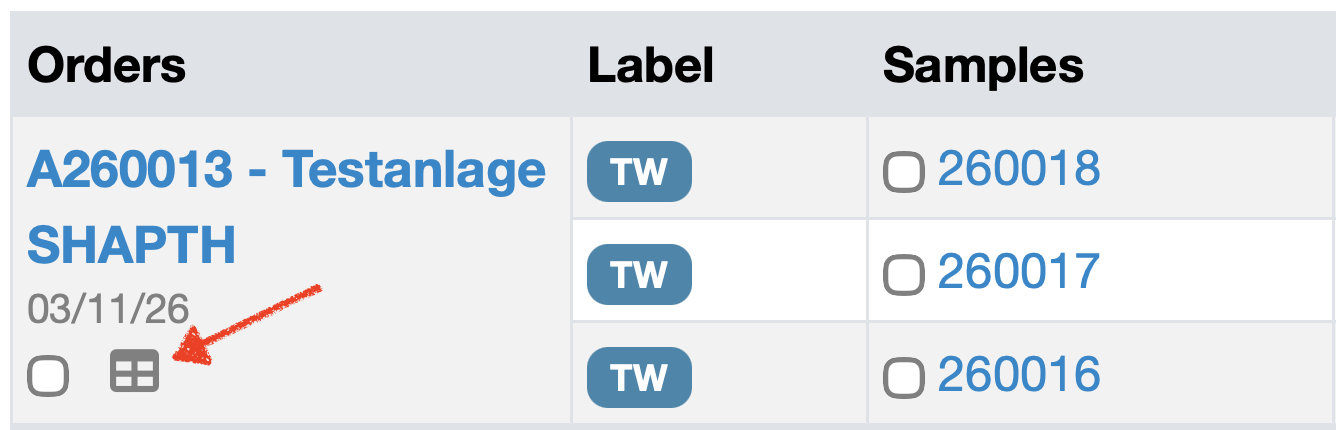
To display a sample selection in the Results table, follow this path:
Navigation bar → Samples → Manage samples → Results table → show

Figure: Show Results table 1
Additional ways to access the Results table:
The Results table enables:
The following figure shows what the Results table looks like in the LDB. The functions are described below.
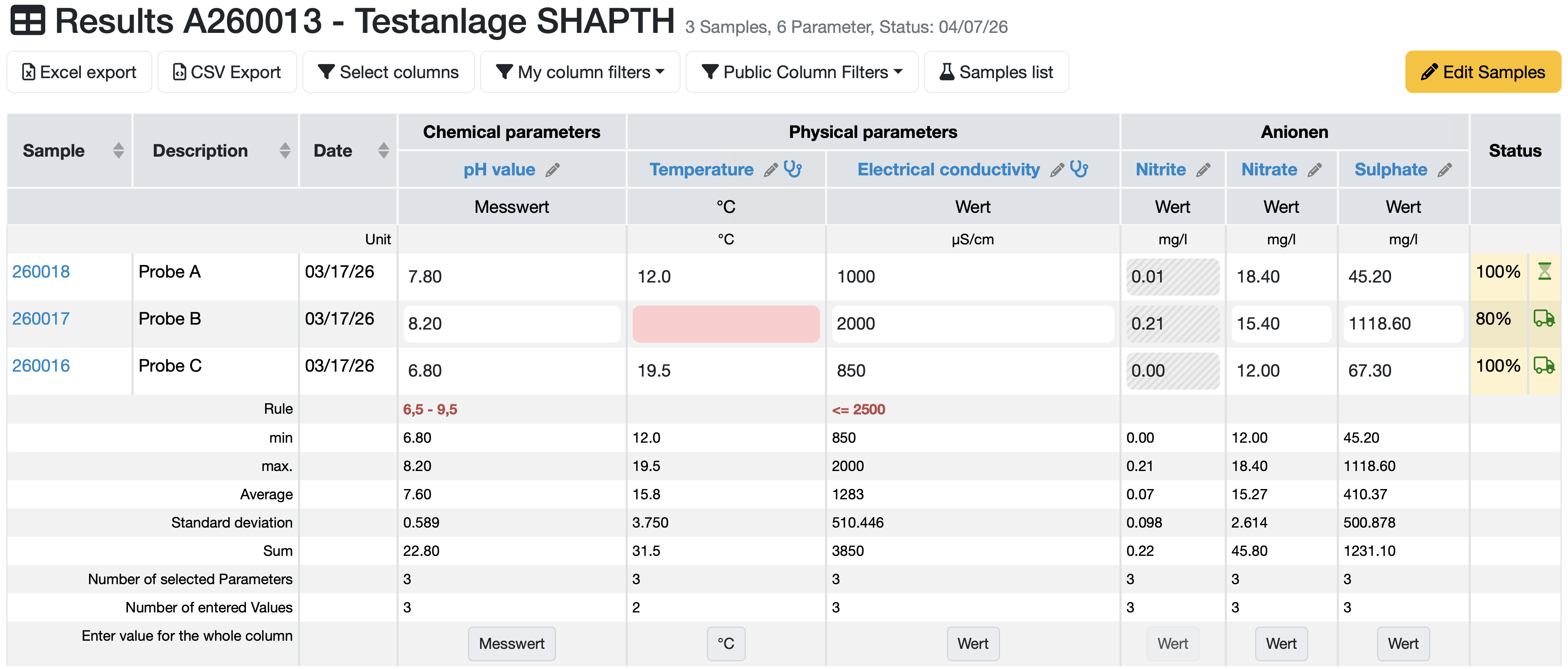
Figure: Results table
Samples are displayed row by row in a table. The parameter columns are grouped together in a configuration-dependent manner (e.g. Chemical parameters, Physical parameters, Anions).
| Column | Description |
|---|---|
| Sample | Displays the sample number as a blue-highlighted link. Clicking it opens the detail view of the sample. The column is sortable. |
| Description | Displays the sample description. The column is sortable. |
| Date | Displays the receipt date of the sample. The column is sortable. |
| Parameter groups (e.g. Chemical parameters, Physical parameters, Anions) | Sample- and configuration-dependent column groups with the respective individual parameters, units and measured values. A pencil icon next to the parameter name allows direct editing of the parameter type (with appropriate permissions). |
| Status | Displays the processing progress of the sample as a percentage along with a color-coded status symbol. |
Note: All sample numbers highlighted in blue are clickable links to the respective sample detail view. The parameter names in the header row are also clickable and open the associated chart. The naming of columns and the available parameter groups depend on the configuration.
Below the sample data, the Results table automatically displays statistical key figures for each parameter:
Measured values can be entered directly in the Results table.
Tab to automatically move to the next input field.Alt ↑, Alt ↓, Alt ←, Alt → or Tab for quick navigation between input fields.Note: Fields highlighted in red do not yet contain a entered value. Fields highlighted in grey contain a formula for calculating results. Locked fields (highlighted in grey with diagonal stripes, or e.g. in the case of finalized samples) cannot be edited. Parameters whose field contains a dash are not selected for the respective sample.
To enter the same value for all samples of a parameter simultaneously, the Enter value for the whole column row is available at the bottom of the Results table.
The value is only saved for those samples where the parameter is selected and no value has been entered yet.
Overwriting existing values
If already entered values are to be replaced, additional confirmation is required:
Deleting values
To delete already entered values, proceed as follows:
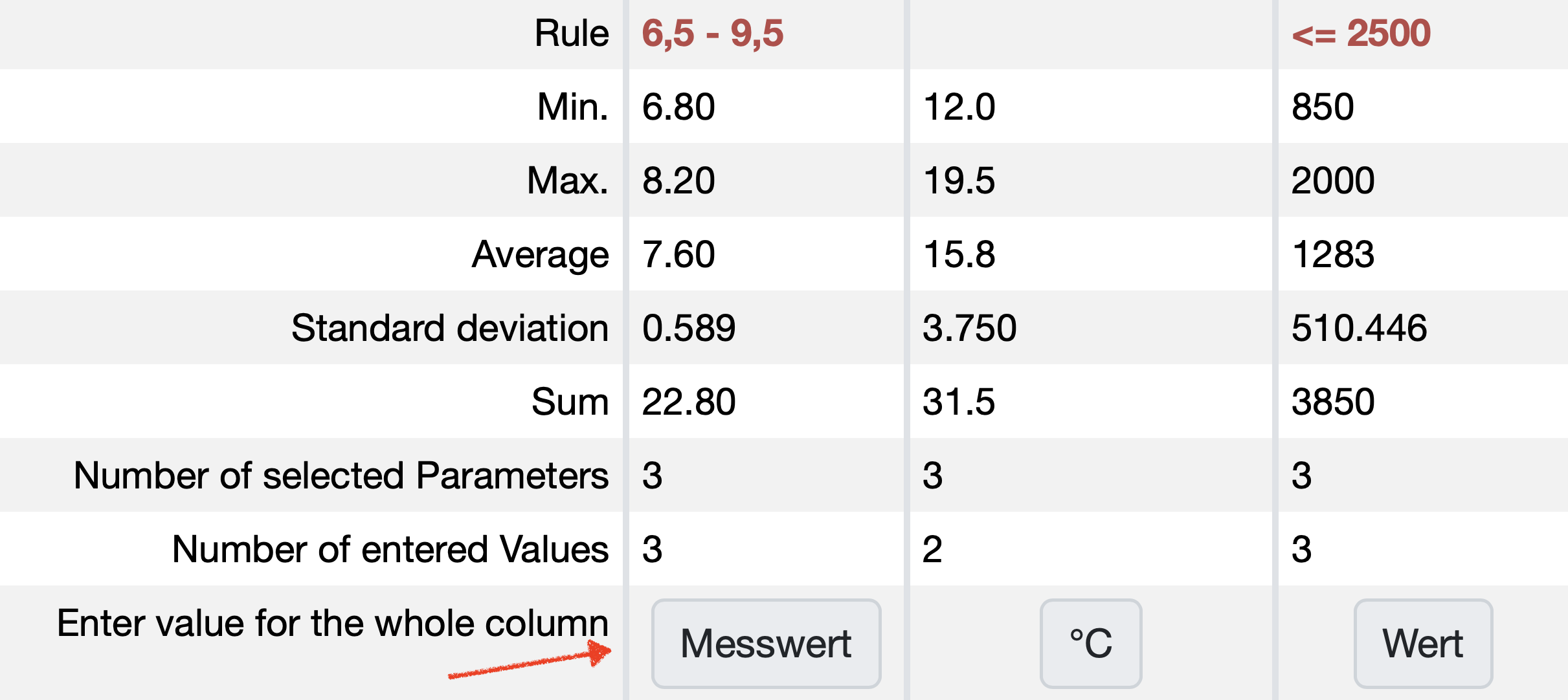
Figure: Enter value for the whole column
Customize the displayed parameter columns individually.
Optionally save the selection as a filter.
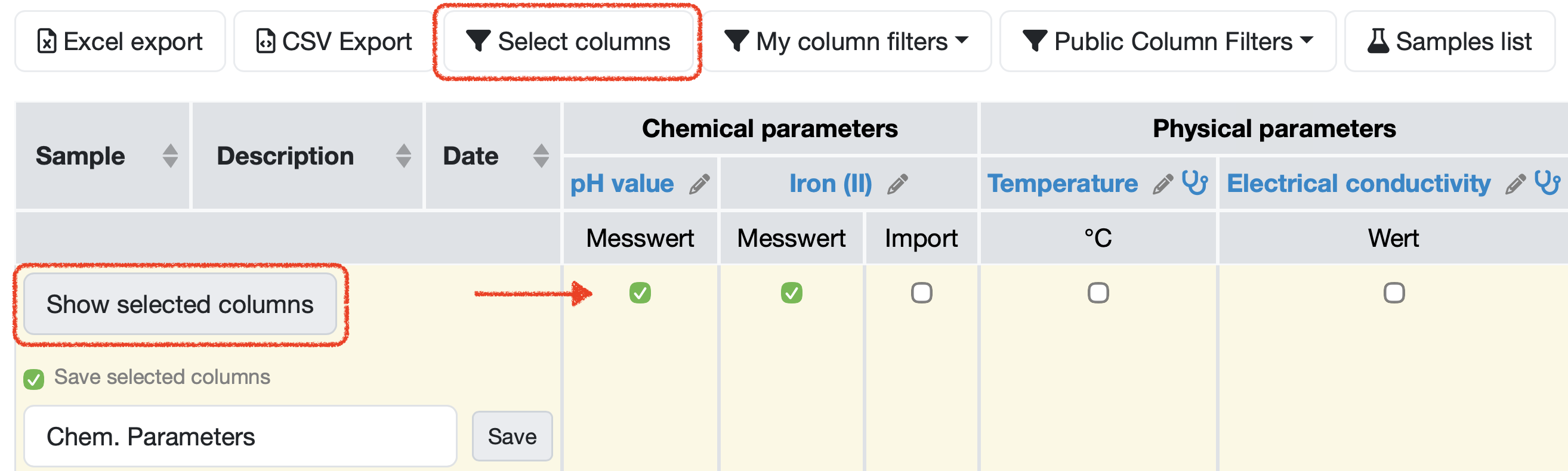
Figure: Select columns individually
Saved column filters enable quick switching between frequently used column views.
My Column Filters
Public Column Filters

Figure: Column filters
Additional Information: LINK_TO_PAGE=60
In the LDB, you can display trends, correlations and histograms as charts, and view statistical key figures (standard deviation, variance, Cp, CpK, etc.). The chart shows the measured values of your samples as a graphical trend, allowing you to assess trends, outliers and compliance with target values at a glance. A tabular overview of the underlying measured values is also available.
Additional Information: Charts and Statistical Key Figures
Click the Edit Samples button (orange, top right) to access the view for bulk editing of all samples displayed in the Results table.

Figure: Edit Samples button
The following describes the functions available to you in the Edit Samples collectively screen:
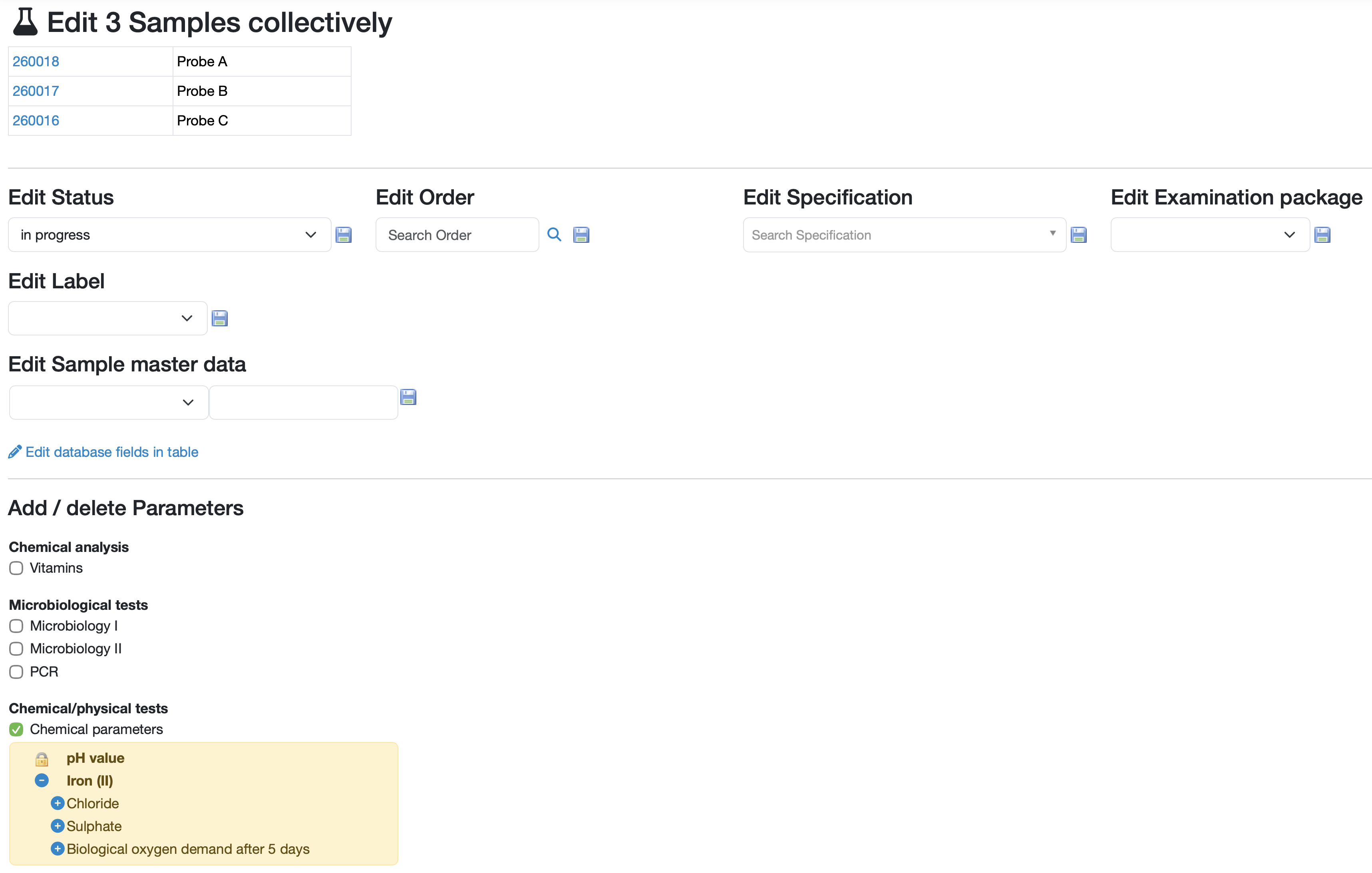
Figure: Edit Samples

Figure: Edit master data simultaneously
Edit the master data of multiple samples in a table view.
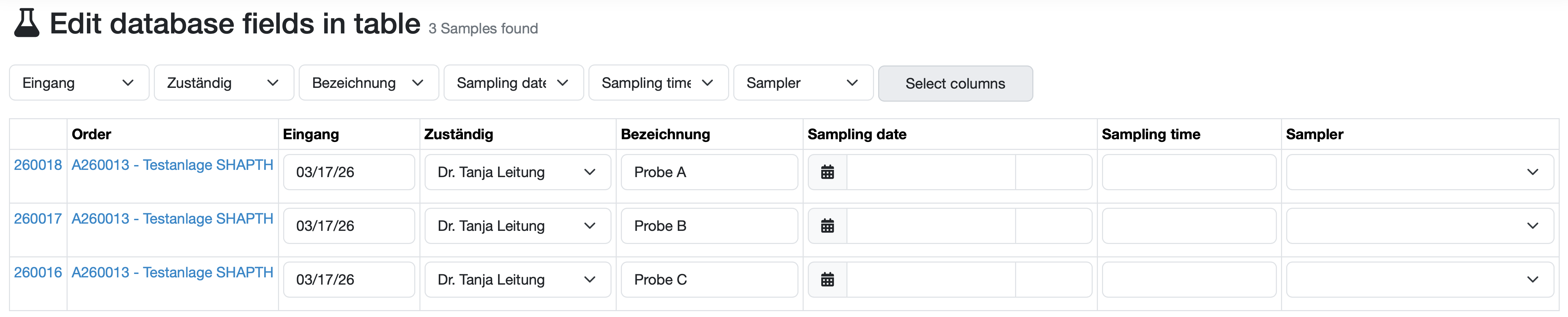
Figure: Edit master data in table
Add parameters to the selected samples or remove them.
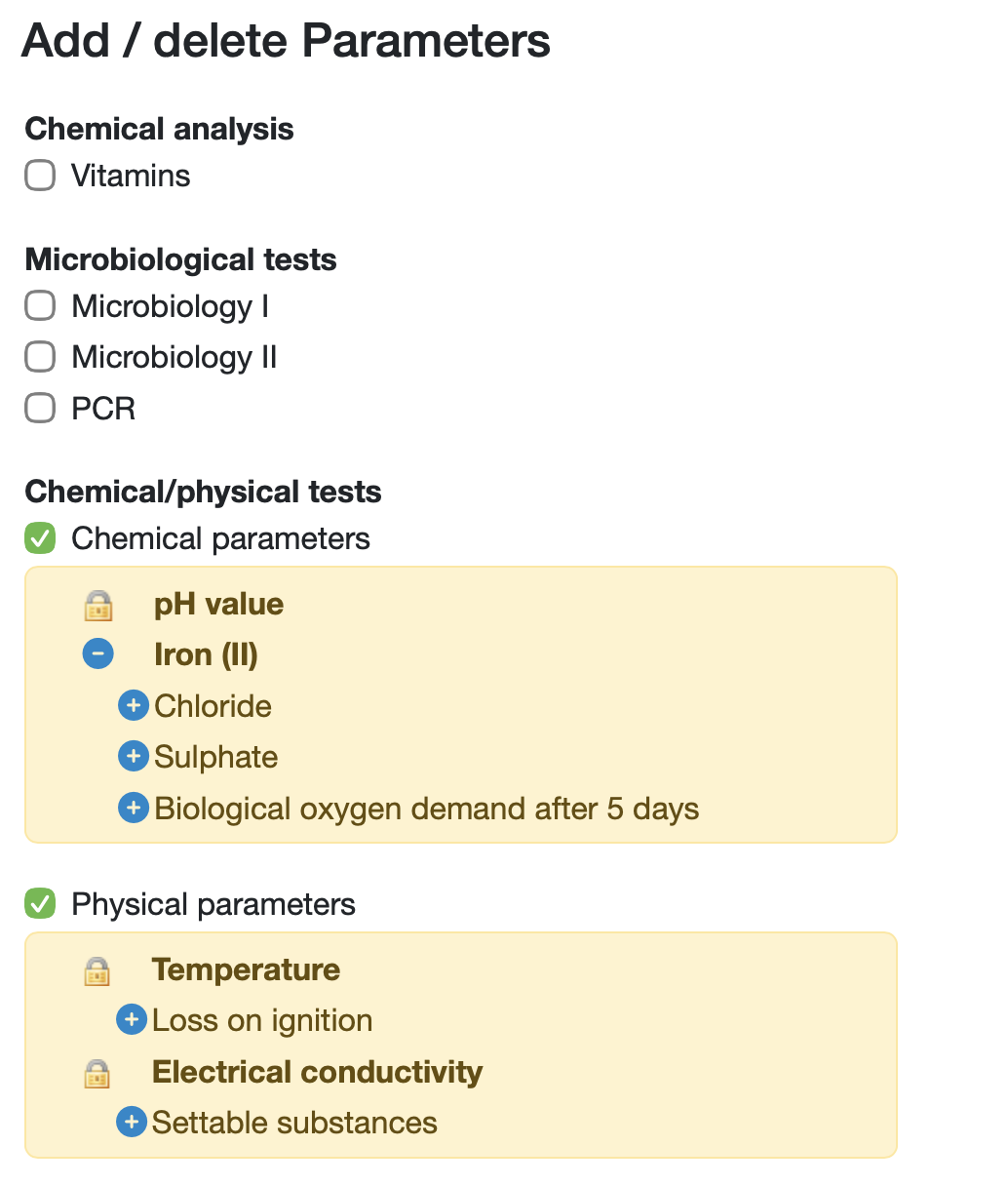
Abbildung : Add / Delete Parameters
Note: Parameters with already entered measured values can no longer be removed. (Indicated by the lock icon.)
Delete all selected samples collectively using the function in the Edit Samples view.
The bulk editing view can also be accessed directly from the Samples list:
The Edit Samples view that then appears provides the functions described above.
Excel Export
CSV Export
Last change: 10/14/26
General information
8D-report
Supplier evaluation
Material
Employees
Customers
Orders
Samples
PDF templates
Assets
Recipes
Reports
Report table editor
Interfaces
AI functions
Introductory phase
Query reports
Templates
Client zone (optional)
Offers
Invoices
Parameters
Calculating with parameters
Webservices
Transformationscode
Test plans / limit values / specifications
Documents control
Questions and answers
Equipment
Trainings
Others
File management
Processes